SCUBA divers travel from around the globe to visit one of nature’s most prized wonders, The Great Barrier Reef. The Great Barrier Reef is the largest coral reef ecosystem and living structure on Earth. The Great Barrier Reef has lost half of its reef since 1995. The constant bleaching that occurs leads to the reef’s death. Coral bleaching occurs when temperatures rise to at least 2 degrees. The coral reef expels algae. The problem comes when the coral reef’s temperature sustains high temperatures and will not let the algae back in. The cause of this is the rise of CO2 in the water, lack of nutrients, and pollutants in the water. This delicate balance is disturbed by the lack of food for micro life, a shortage of macro life, and harmful substances like sunscreen. Practicing ocean conservation, can lead to a healthy long-term ecosystem.
Sustainable Practices
While there is no guarantee that corporations will use sustainable practices, there are small things you can do to conserve our ocean’s wildlife. Along with reducing your carbon footprint, recycling, saving water from runoff, and using renewable energy, there are other steps we can take to protect our ocean.
Look for sustainable seafood. Farmed fish may increase the population, but they can easily pollute the ocean water because of cramped conditions. Go for sustainable wild-caught seafood. Health experts recommend that you only have two to three servings of seafood a week.
Wear coral reef-safe sunscreen if you plan to enter the ocean. Save sunscreens with titanium dioxide, oxybenzone, and Octinoxate for the tennis court. These chemicals take a while to break down and are not much better for humans.
Support sustainable farming. Check for foods grown without the use of pesticides and chemicals. The runoff of these products harms the ocean. Look for your meat to be raised using crop rotation. Crop rotation lowers the risk of pollution and agricultural waste runoff.
Safe ocean practices such as idle speed in no-wake zones and disposing of fishing lines in designated areas will keep wildlife from needless death and dismemberment.
Raise awareness
Most people are unaware of modern-day whaling industries, ocean conservation, fishing practices, and how farming affects our ecosystem. Sustainable fishing means plenty of food for us and our macro life. A healthy balance between macro and micro life means a sustainable increase in sea life. Raising awareness will help those around you care for our precious resource, the ocean. Helping raise awareness for endangered species such as the vaquita will help balance out our food chain and keep us from losing our ocean wildlife. Needless animal deaths occur when illegal activities such as gillnet fishing take place. Practicing safe fishing and supporting marine conservation are ways that you can maintain stewardship over the beautiful seas. Let’s leave something behind for our children to explore and care for.
Proper Maintenance extends the life of SCUBA gear.
If you SCUBA dive often, you know servicing your gear should occur after about 100 dives for equipment longevity. You should also clean their gear after each dive. Find out the best way to clean your SCUBA gear.
Wetsuit, Drysuit, Booties, and Gloves Care
Wetsuits, dry suits, booties, and gloves use expensive neoprene materials. It is recommended to wash them in wetsuit shampoo. Don’t rush to throw your wetsuit or dry suit into the washer with any store-bought detergent. The best way to wash your wetsuit is with wetsuit shampoo. Soak it in baking soda beforehand for extra cleaning power. To ensure your suit lasts longer and keeps its flexibility, soak it in lukewarm water. Keep it out of the heat for extended usage. You can use a toothbrush to dislodge any dirt or sand that comes in contact with your zipper. Wash your gloves and booties like wetsuits. If you are cleaning a dry suit, spray off dirt with water and wash with a high-quality dry suit shampoo. You can use wetsuit shampoo if needed. Make sure you protect your dry suit zippers with a bee’s wax-based lubricant to detract dirt. Clean your wetsuit and dry suit daily so that they will not erode over time or grow bacteria. Properly dry the inside of your booties and gloves with a paper towel to prevent mold growth.
Masks, Fins, Snorkels, Regulators, and Mouthpieces
All of these items need sanitization regularly. Before cleaning, make sure all items are unbuckled, taken apart gently, and placed in cool water. Make sure the dust cap is dry, clean, and secured over the inlet. Masks, fins, snorkels, regulators, and mouthpieces should soak in warm soapy water until the dirt dislodges. Following the soak, sanitize these items in solutions designed specifically for diving gear.
Buoyancy Control Devices
These devices are very intricate and easy to mess up. You do not want water trapped inside of this device. Follow these detailed steps to clean the buoyancy control device.
Gently rinse your BCD and use a brush with wetsuit shampoo to handwash your BCD on the outside.
Dump all of the water out of the bladder.
Use your low-pressure inflator hose to pour cold, clean water into the bladder to wash out excess old water.
Rinse your BCD on the inside and outside.
Invert the BCD so that the inflator hose is the lowest point, and pour out the excess water.
Inflate the BCD halfway and allow it to dry completely.
For tanks, keep moisture out by filling to 25-500 PSI. Chlorine and salt can erode your tank over time. Rinse your tank with water and wipe it down after coming into contact with chlorine. If a bit of rust appears on the outside you can use a brush and dish soap to clean it away. Rust on the inside is very difficult to remove and can permanently damage your tanks rendering them harmful to your breath. The only lubricant you should ever use on your equipment is beeswax. Oil attracts dirt and, petroleum jelly can ruin your rubber O-rings.
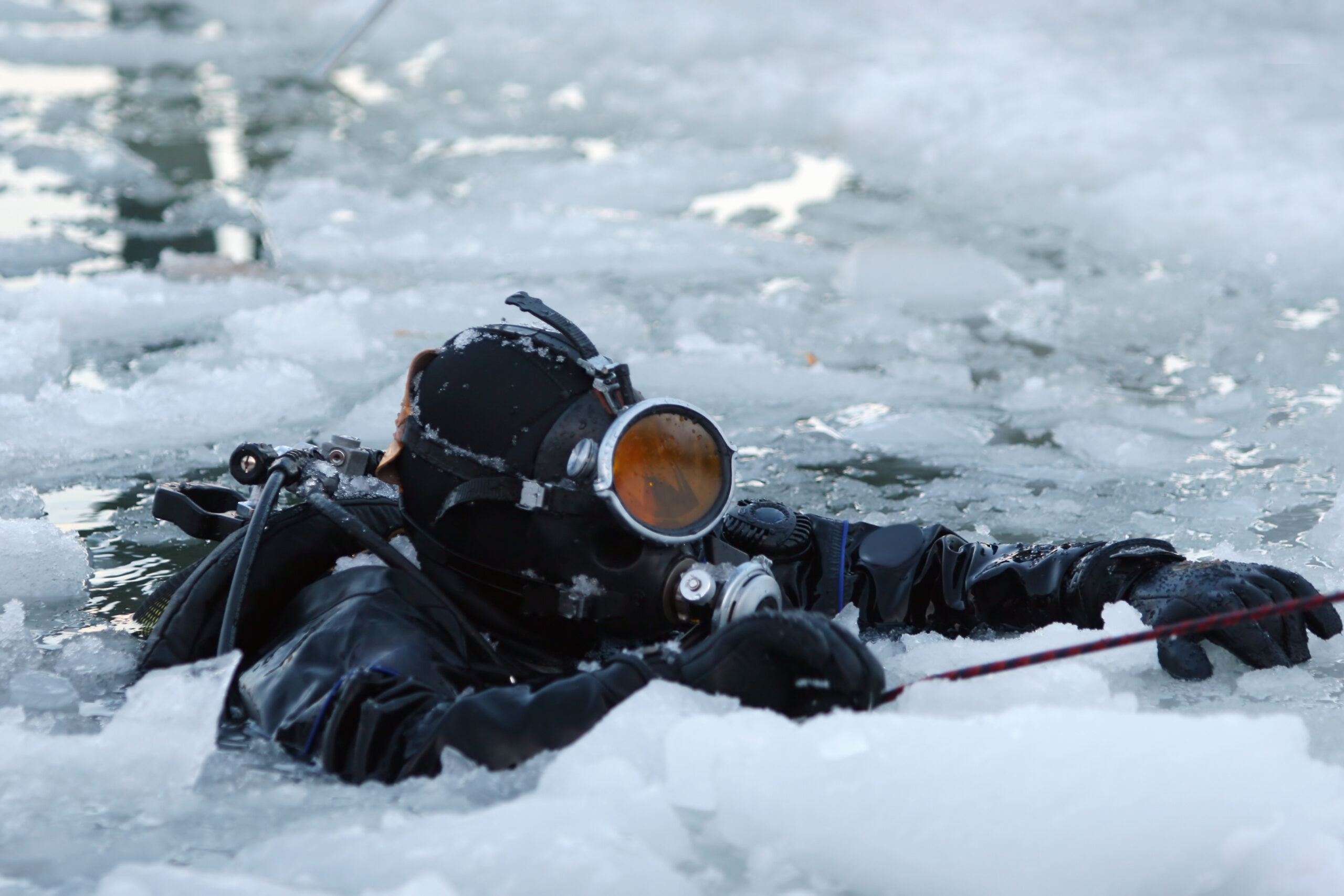
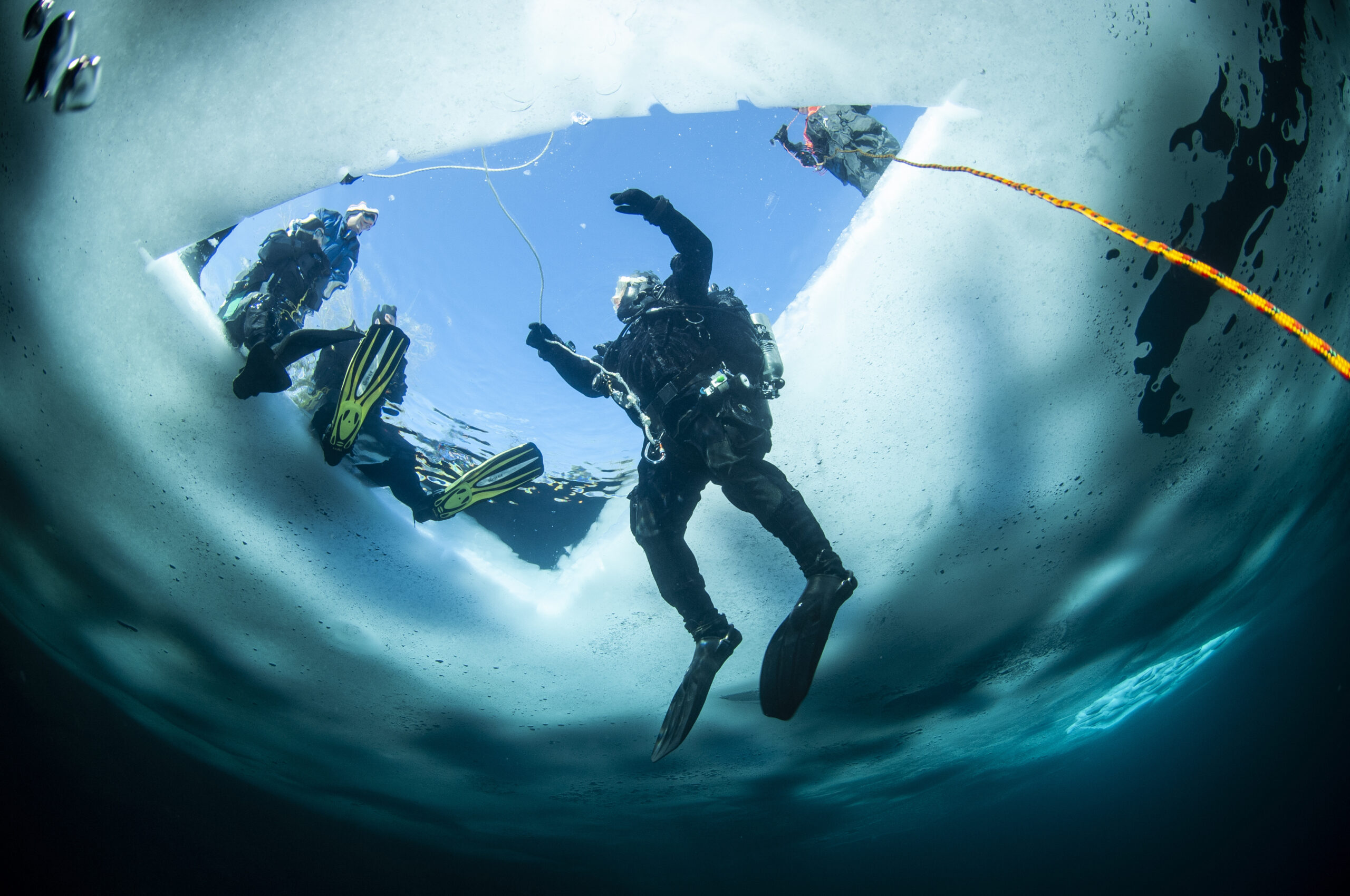
Divers who are intrigued by the “Polar plunge” or ice dives are willing to push the limits of their bodies to experience the beauty of underwater diving. Beautiful icebergs and macro life make for unique diving experiences. If you anticipate a cold icy dive, take these steps to ensure you don’t develop hypothermia, frostbite, or other cold-related conditions.
Find a Dry Suit versus a Wet Suit
If you are diving in waters 50 degrees F or below, you will need a high-quality dry suit. Drysuits allow you to stay warm and layer clothing underneath using a thin layer of air around the body. High-quality zippers, seals, and valve openings allow you to dive without the threat of allowing water to seep in. Latex suits are a more customizable seal. Neoprene is also a high-quality material. By the Shore SCUBA Instruction offers high-quality wet suits for purchase.
Build Up Your Resistance to the Cold
The best way to build up resistance to the cold is by keeping the temperature in your home lower than the summer temperatures. This way the body will start to develop an equilibrium between inside and outside. You can also try to take cold showers. The cold water on your skin will equate to a polar dive with a dry suit. Put on a wet suit and go for a swim in a pool if you can. You will want your inside somewhat warmer than the outside. Just avoid toasty temperatures as much as possible before your dive. Start gradually and work your way up to swimming in that freezing pool. Ask your dive instructor for advice on how to approach a polar dive.
Buy High-quality Fitted Drysuits
High-quality stitching, neoprene, and appropriate fit make for the perfect drysuit. Suits need tight seals around the limbs and neck with fluidity around the legs. High-quality drysuits will make room for the wetsuits or drysuit undergarments you choose to layer under the drysuit. Look for terms such as “seal” or “self-donning zipper”. A drysuit needs to be easy for you to get into without letting in the water.
An example of trustworthy drysuits is Pinnacle dive suits.
They offer self-donning front zippers and tight valve seals. Pinnacle sells a traditional drysuit with a valve and a military-approved suit with latex groin bands for flexibility. Both are made with high-quality neoprene and have a front zipper made with Aquaseal. These suits resist scraping and cutting with their heavy-duty outer membrane exterior.
If you are interested in finding the right drysuit or developing resistance to cold water, feel free to reach out to Kevin Alexander at By the Shore SCUBA Instruction.
Have you ever fantasized about diving below the surface of the Arctic Ocean or swimming amongst the icebergs? The open ocean seems vast, mysterious, and dangerous. Diving in Polar regions seems impossible, and the dark waters seem lifeless once macro life has passed through. However, macro life is not the only form that passes through the sea. There are Polar Regions that have incredible micro life beneath the sea. If the open Polar ocean intimidates you, many frozen lakes offer a more controlled environment. Here are some of the most breathtaking, Polar regions where you can dive around the ice. You may need a dry suit before you go.
Antarctica
Even though you need to be a scientist to stay in Antarctica, there are voyages available to the public. These start around 7000 for the ship and 500 for diving. Antarctica includes beautiful macro life, surprisingly stunning icebergs, and surprisingly a vivid micro life in the ocean. The macro life alone is a reason to embark on this unforgettable journey. You will only find the emperor penguin in Antarctica. These birds are unique to the region. Here you will get to experience them in their natural habitat, diving for fish. Also unique to Antarctica is the leopard seal which preys on the emperor penguin. You may find them sometimes visiting New Zealand. The likelihood of finding them there though is relatively low. These are the primary apex predators of the ocean. They are aggressive but very curious. They rarely see divers and will be inquisitive when you enter the water. Other macro life includes the minke whale, humpback whale, and occasionally orcas will pass through. They are Apex predators but, they do not settle down in Antarctica like Leopard seals. Another unique aspect of diving in Antarctica is there are no sharks. The stunning icebergs create burrows of beauty in the colder months. However, it is micro life that surprises new divers. Fish inhabiting the Circumpolar current survive by producing a natural anti-freeze in their body. No fish pass through the Circumpolar current so, these fish can never leave this environment. Beneath the Arctic sea, you will find large, bright, and red starfish that feed off lipids, beautiful shiny spiral-shaped snail shells, and lots of bright red krill. Lichen grows among the rocks near the coast. Microlife in Antarctica is more fertile and diverse than expected. Down here, you will find a diverse ecosystem that has adapted to subzero temperatures over the years. It is surprisingly warmer in the water than on land. Along with the underwater magic, you will find the mysterious Norwegian vessel, Guvernøren. This shipwreck and icy glaciers, add to an unforgettable scenic drive.
Lake Huron
If you love shipwreck diving in a more secure environment, Lake Huron in Tobermory, Canada, offers an exciting excursion to explore the 119-foot wide Sweepstakes schooner sunk in 20 feet of water. By March, the water has frozen most of the way. You can walk or sled over to the dive site. You may even be able to swim into icy caverns. It is worth considering a charter with a group into the icy waters. Alongside diving into the deep caverns, you may stop and walk into the icy caves alongside the lake where pools of water have frozen, and there are beautiful ice crystals.
For deep water dive enthusiasts, this calm environment offers a soothing suspension deep below the icy waters.
Baffin Island, Canada
Baffin Island, Canada, is convenient for those who want to visit the Arctic circle. This location, referred to as the Arctic Kingdom, is one of the few places you will find the elusive narwhal. Narwhals are the most mysterious sea mammal since they dive deep below the ocean, are terrified of humans, and cannot survive in captivity. Baffin, Canada, is rich in these mammals due to its almost nonexistent human population. Environmental enthusiasts are drawn here as the Polar Bear population thrives in the icy waters. Towers of mountains, cliffs, and glaciers offer scenic thrills for divers who brave the Bay. Prices to stay in Baffin start at just above $2000. Dives start above $18,000 for seven days. For an Arctic dive, this price is relatively low since Arctic expeditions begin at $35,000. You may be able to chart your trip to Baffin, Canada if you find a Master diver that offers excursions to the water from a different outlet. Baffin, Canada will be one of the few locations you will be able to dive with narwhals.
White Sea, Russia
Unlike Baffin Island, the White Sea is less expensive and one of the few places to ice dive. The immense ice is layered in large blocks above the surface. This dive is one of the coldest dives (below 20 degrees) and the thick ice shuts out most of the light creating a dark green atmosphere. Divers pull off large chunks of ice. This dive is not for the faint of heart. There is not a lot of space to immerge from the icy water. There are strategically placed, ice holes that allow divers to immerge from the small spaces. The macro life includes the lovable Beluga whale and Harp Seal. Your best bet is diving near the Solovetsky islands if you want to find a Beluga.
Lake Sassol, Switzerland
If you love icebergs then this place is for you. Even though Lake Sassol is a lake, the formations come from snow and ice rolling off the mountainside and packing into icebergs. Polar enthusiasts love swimming through the various icebergs. The icebergs hold ice caves that divers can enjoy. Even though the formations are tall, 6,900 ft, the lake is relatively shallow.
The only road to Lake Sassol is closed during the winter months. So you will need to visit in Early Spring before the icebergs melt.
Lake Baikal, Russia
Lake Baikal is the largest freshwater in Asia full of biodiversity. The unique micro life includes krill, spiny amphipods, reefs, and fish. With over 2,500 species of animals and 1,000 species of plants, this lake is full of biodiversity. The hardened reefs offer a spooky, yet lovely scenic view underwater. For animal lovers, the adorable Nerpa seal can be found. These furry seals are the only exclusively freshwater seals. Along with the cute wildlife, Lake Baikal is a wreck divers paradise.
Diving in the North Pole? Can it be done?
If you are curious about diving in the North Pole, there are occasional diving charters to dive there. Reserving a seat on a voyage to the North Pole costs about $35,000 or more per person. For this reason, many people do not dive here. People disembark from Helsinki. Diving here, you have the chance to see polar bears, narwhals, walruses, Weddell seals, and much more macro life. You will experience the Adelie penguins diving for food in the complex ecosystem. The ice is filled with caverns, small holes, and tunnels. Individuals can experience what it is like hiding as a seal from a polar bear.
If this dive is a dream of yours, save up for the experience and regularly check excursions.
Ice divers need to proceed with caution. The freezing temperatures can challenge even the fittest diver.
You will need a drysuit to embark on your frozen quest. If you are interested in finding the right drysuit, By the Shore SCUBA Instruction can help you find all the materials you need.