Why You Need a Perdix 2 Dive Computer from Shearwater
Scuba diver makes the ok sign with two hands

The Perdix 2 dive computer, a cutting-edge computer with attachable components, sleek design, and reliable strength, is a must for the serious diver. The diving community trusts Shearwater products because of their numerous awards and certifications, such as their Teric lithium Battery certification and their Eurotek 2014 award for innovation. The dive watch company has gained notoriety among marine biologists. The safety certifications are not the only appealing factors to the Perdix 2. Its pristine appearance, which includes reliable titanium framing, adds to its distinction. If you have $1400, you can invest in a reliable, cutting-edge dive watch (one that will see you through a professional-level deep water dive); look no further. Here is why you need a Perdix 2 dive computer from Shearwater.

Materials

What makes the Perdix 2 sturdy, reliable, and resilient are the materials used to make it. With titanium, the armored casing surrounds the bezel. This strength enables the bezel to stay intact and give accurate oxygen readings. The piezo touch buttons are titanium which protects the integrity of the electrical makeup of the computer. The screen is made from aluminosilicate, meaning its high alkali for strength. Aluminosilicate glass can withstand temperatures of 375°C (707°F), making this an intensely reliable watch. 

Multiple Diving Modes

The multiple diving modes of the Perdix 2 mean that you don’t have to upload or change software, buy a special attachment, or purchase another watch. The diving modes included are a gas nitrox mode, an OC technical dive mode, closed circuit/bailout, and gauge modes. The nitrox gas mode allows optimization between these three modes: air, nitrox, and three gas nx. The OC technical mode allows the air to integrate optionally. Closed circuit and bailout modes keep PO2 at a constant, which lowers your risk of hypoxia, but the bailout gas mode allows the free flow of oxygen in case your body craves more oxygen. The gauge modes display the pressure of your tanks, depth, and time, and this mode offers a complete diving log. Ask your dive instructor which mode selection works best for you. 

Additional Information

Along with its multiple diving modes and state-of-the-art materials, the Perdix 2 gives off warning vibrations to alert you to potential dangers and changes in your air system. It has Bluetooth wireless technology and Cloud control available in 13 different languages. Cloud control lets you download and display dive logs quickly onto any device. The Perdix 2 offers more than most dive computers. Change modes with care. Consulting an experienced PADI instructor will ensure that you safely program your watch for the best oxygen optimization. By The Shore SCUBA Instruction offers PADI instruction certification and Nitrox courses. If you purchase a Perdix 2, meet with our instructor Kevin Alexander to learn how to use it safely. We can also help you service other Shearwater equipment.*

*Disclaimer- By the Shore SCUBA Instruction does not guarantee your safety while using a Perdix 2. SCUBA lessons and speaking with a PADI instructor are the best way to ensure your safety. By the Shore SCUBA Instruction cannot guarantee your safety on any dive since all dives come with some reasonable risk. 

Sources-Shearwater PERDIX 2 – Toughest, most reliable full-size computer yet!

Constant PO2: What Is It, and How Is It Different than Nitrox? – International Training – SDI | TDI | ERDI | PFI (tdisdi.com)

ALUMINOSILICATE (auer-lighting.com)

Shearwater Teric Dive Computer Review by a Marine Biologist — Nature Tripper – The Insider’s Guide to Wildlife Travel

Decrease the Risk of SCUBA Related Deaths
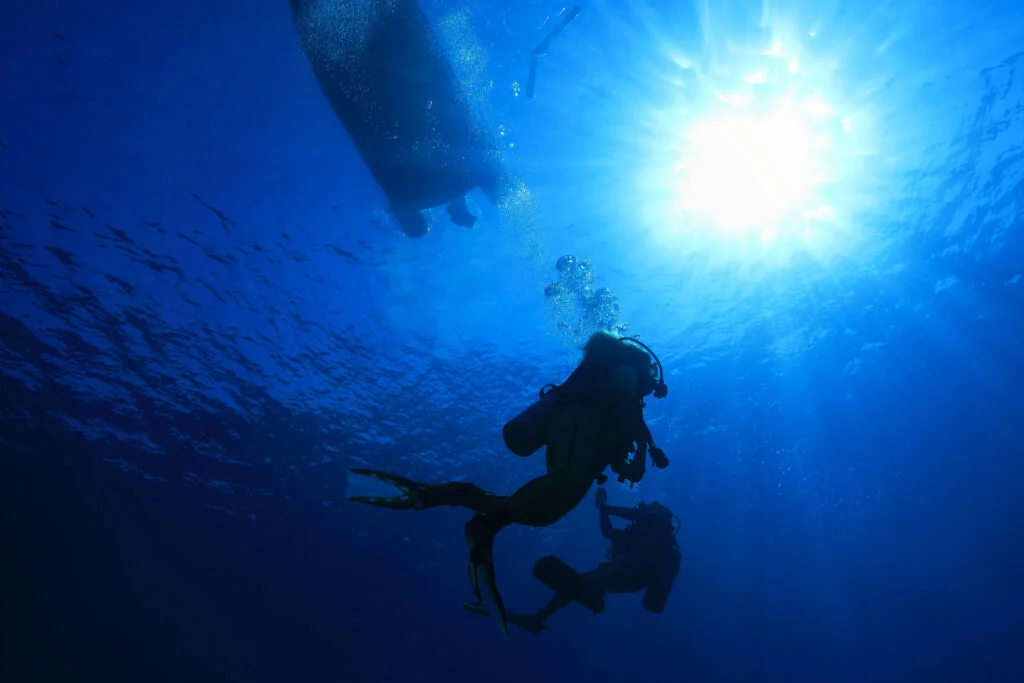
Scuba divers on safety stop with bouy underwater in the Ocean

   SCUBA diving as a recreational activity has increased in the last 10-15 years. There has also been an increase in SCUBA diving accidents within the early 2010s. This number lowered during the pandemic from 2020 to 2022. With an increase in activity, SCUBA deaths have recently increased this start of Spring. SCUBA diving deaths are relatively low compared to the number of divers around the United States. Divers Alert Network notes 80-100 divers die a year in North America. The last statistic on SCUBA deaths in 2015 was 1.8 deaths for every million. While SCUBA-related deaths are low, increasing awareness in the SCUBA community places divers on alert. Every diver can lower their risks with preventative measures. 

Proper Gear Maintenance and Usage

     Purchase high-quality gear that is fitted specifically for you. Here are areas where you cannot afford to overlook proper gear usage.

  • Your SCUBA mask needs to seal out moisture before you ever enter the water. Purchase and test the mask before attending an open ocean dive. The seal must be fully closed. If your mask leaks the slightest amount of water, have a seasoned dive instructor see if you need to work on your seal or a different SCUBA mask. 
  • Make sure your fins fit correctly. Otherwise, you will lose them and struggle to swim towards the boat. 
  • Buoyancy control devices (BCD) regulate your ability to sink and float. This piece of equipment can affect your tanks, wetsuit, and mask. You want your BCD to fit closely, but not so tightly that it’ll squish your body when it inflates. Test your BCD with a PADI instructor in a swimming pool before you attend a dive. You do not want to float too close to the surface. You need to stay well below boats that may pass by. 
  • Ensure all tubes, hoses, straps, and gauges are secured tightly against your body. It is easy for loose items to catch between rocks or boat propellers. 

Proper Practices 

  • Never dive without a buddy. Diving alone puts you at risk. You need someone who can assist you in a medical emergency and warn you of nearby dangers. 
  • Practice and always recertify CPR/First Aid. You will need to learn CPR and first aid before you dive. Your dive buddy should also have updated CPR/First Aid training. Practice CPR and first aid regularly to prepare for the worst. 
  • Avoid boating accidents by staying alert underwater and checking BCDs beforehand. Dive Training recommends someone is aboard your boat in case you find yourself diving in the open ocean. Be aware of the shipping lanes, vessels, and other large machinery. 
  • Avoid areas with riptides or currents if possible. 
  • Use caution when entering caves or confined spaces.
  • Private boats should only have experienced divers on board. 
  • Avoid touching or approaching venomous or predatory animals. 
  • Check all of your equipment before setting sail for a dive.
  • Equalize your ears and mask. Your instructor or another PADI-certified diver can assist you.

Health and Safety

There are regular health practices that divers should take to prevent life-threatening complications. Divers need to cope with the pressure deepwater dives place on your body. Here are some health and safety tips to lessen bodily strain. 

  • Keep your physical fitness in shape. Regularly swim, practice breathing, and participate in cardio for peak health. Weight training is optimal so you can gain familiarity with your body under different levels of pressure.
  • If you have sinus congestion or migraines, postpone your dive. 
  • If you feel ill after a dive, visit a local emergency room or urgent care to rule out any life-threatening complications.
  •  Use a dive computer to stay within a dive table and avoid decompression sickness.
  • Familydoctor.org advises to hold off flying 12 hours after diving and 24 hours if your dive has decompression stops.

Your health and safety are a priority. If you or a fellow diver are ever in an emergency, call the Divers Alert Network emergency line. Their website has a list of emergency phone numbers for different locations worldwide. Checking in with a fellow PADI instructor for more safety concerns is recommended before your first dive. Diving is at one’s own risk. Tread the water with caution.

By The Shore SCUBA Instruction LLC. is a SCUBA school located in North Carolina. We acknowledge that the information provided is no guarantee of safety. SCUBA diving is an at-risk activity and requires proper PADI instruction and other safety training. We accept no responsibility for death, injury, or damaged equipment. By The Shore SCUBA Instruction LLC. is not medically trained. You should consult your doctor for all safety suggestions. Our information comes from sources online that claim SCUBA knowledge and experience. 

These sources are listed below.

Divers Alert Network (dan.org)

familydoctor.org

Encanto grandfather killed in a diving accident in Hawaii (10news.com)

Scuba diving fatalities – Wikipedia

How to Clean your SCUBA Gear

Complete scuba gear available at Raleigh scuba
SCUBA gear maintenance
Proper Maintenance extends the life of SCUBA gear.

If you SCUBA dive often, you know servicing your gear should occur after about 100 dives for equipment longevity. You should also clean their gear after each dive. Find out the best way to clean your SCUBA gear. 

     Wetsuit, Drysuit, Booties, and Gloves Care

Wetsuits, dry suits, booties, and gloves use expensive neoprene materials. It is recommended to wash them in wetsuit shampoo. Don’t rush to throw your wetsuit or dry suit into the washer with any store-bought detergent. The best way to wash your wetsuit is with wetsuit shampoo. Soak it in baking soda beforehand for extra cleaning power. To ensure your suit lasts longer and keeps its flexibility, soak it in lukewarm water. Keep it out of the heat for extended usage. You can use a toothbrush to dislodge any dirt or sand that comes in contact with your zipper. Wash your gloves and booties like wetsuits. If you are cleaning a dry suit, spray off dirt with water and wash with a high-quality dry suit shampoo. You can use wetsuit shampoo if needed. Make sure you protect your dry suit zippers with a bee’s wax-based lubricant to detract dirt. Clean your wetsuit and dry suit daily so that they will not erode over time or grow bacteria. Properly dry the inside of your booties and gloves with a paper towel to prevent mold growth.

Masks, Fins, Snorkels, Regulators, and Mouthpieces

All of these items need sanitization regularly. Before cleaning, make sure all items are unbuckled, taken apart gently, and placed in cool water. Make sure the dust cap is dry, clean, and secured over the inlet. Masks, fins, snorkels, regulators, and mouthpieces should soak in warm soapy water until the dirt dislodges. Following the soak, sanitize these items in solutions designed specifically for diving gear. 

Buoyancy Control Devices

These devices are very intricate and easy to mess up. You do not want water trapped inside of this device. Follow these detailed steps to clean the buoyancy control device.

  1. Gently rinse your BCD and use a brush with wetsuit shampoo to handwash your BCD on the outside. 
  2. Dump all of the water out of the bladder. 
  3. Use your low-pressure inflator hose to pour cold, clean water into the bladder to wash out excess old water. 
  4. Rinse your BCD on the inside and outside.
  5. Invert the BCD so that the inflator hose is the lowest point, and pour out the excess water.
  6. Inflate the BCD halfway and allow it to dry completely. 

     For tanks, keep moisture out by filling to 25-500 PSI. Chlorine and salt can erode your tank over time. Rinse your tank with water and wipe it down after coming into contact with chlorine. If a bit of rust appears on the outside you can use a brush and dish soap to clean it away. Rust on the inside is very difficult to remove and can permanently damage your tanks rendering them harmful to your breath. The only lubricant you should ever use on your equipment is beeswax. Oil attracts dirt and, petroleum jelly can ruin your rubber O-rings.