Reliable Guide to finding the best SCUBA Mask in 2023

Choosing the best SCUBA goggle is essential for having a comfortable and safe diving experience. So, for this purpose, we shared some of the best SCUBA masks and some helpful tips on selecting the right one according to your needs and wants. Here is your powerful guide to finding the best SCUBA masks in 2023.

Buyers Guide for SCUBA Masks

SCUBA masks have their unique features, specifications, pros, and cons. Here are some key factors to consider before deciding to buy SCUBA masks:

Fit

The fit of the masks is crucial for comfort and preventing leaks. The mask should fit snugly without being too tight and must create a good seal around the face. Try on several SCUBA masks to find one that fits your face.

Field of vision

Look for masks that provide a wide field of vision underwater. Consider purchasing single-lens masks or multiple lenses (multiple lenses offer a wider field of view).

Lens material

In general, SCUBA masks have glass materials or plastic lenses. Glass is more durable and scratch-resistant while heavier and more expensive. Plastic lenses are lighter and frugal but scratch more easily.

Goggle volume

The volume of the masks refers to the amount of air space inside. Many divers prefer low-volume masks. They are easy to clean and provide a better field of vision. Alternatively, high-volume masks are more comfortable for so, me divers.

Comfort

Look for masks with a comfortable strap and a soft, hypoallergenic skirt that won’t irritate your skin. Some masks offer features like adjustable straps and nose pockets for added comfort.

Price

SCUBA masks can cost as little as $20 or as much as several hundred dollars. In addition, consider your budget and the features you want in SCUBA masks when deciding.

Tilos Universal

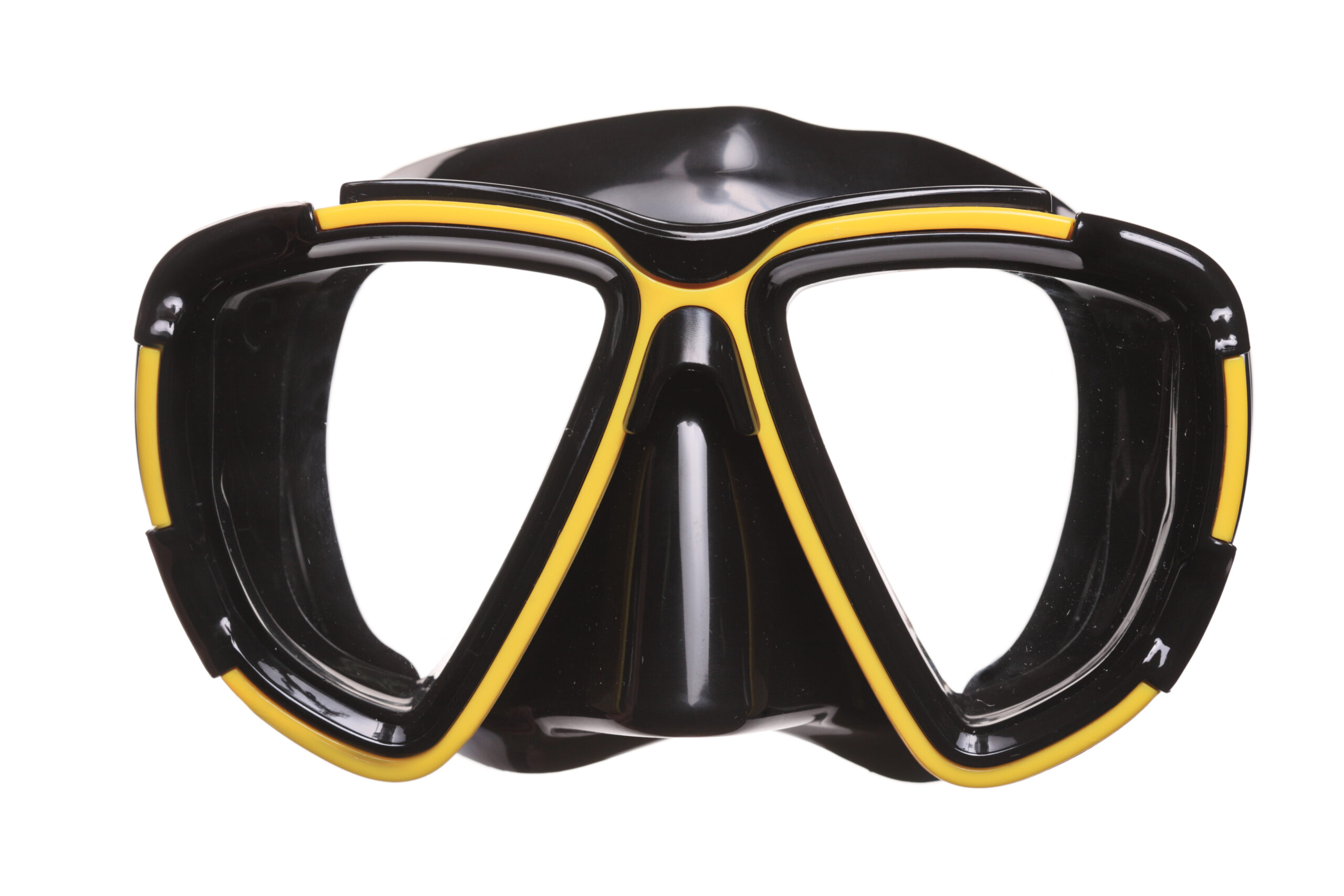
Designed to be used for both SCUBA diving and snorkeling, the Tilos Universal SCUBA masks have a low-volume and single-lens design. Tilos Universal features a soft silicone skirt that provides a comfortable and secure fit and tempered glass for the lens that is durable and provides a clear view underwater.

One of the standout features of the Tilos Universal SCUBA masks is its universal fit design, which means it can fit a wide range of face shapes and sizes. The adjustable strap and buckle system also makes it easy to customize the fit for maximum comfort and security.

A Great Reputation

Users have generally praised the Tilos Universal SCUBA masks for their comfortable fit, good seal, and wide field of vision.

Overall, the Tilos Universal SCUBA masks seem to be a high-quality and versatile option for SCUBA diving, particularly for those who prioritize comfort, adjustability, and a low-profile design.

Universal Tilos Pros and Cons

Pros:

● Universal fit design can accommodate a wide range of face shapes and sizes.

● The soft silicone skirt and adjustable strap system provide a comfortable and secure fit.

● The tempered glass lens is durable and scratch-resistant and provides a clear view underwater.

● The low-volume design makes it easy to equalize the pressure as you descend.

● Lightweight and easy to pack for travel.

Cons:

● Some users may experience leaking or fogging if the masks do not fit properly or are not adjusted correctly.

Recommended Mask Accessories

To maximize your SCUBA diving experience, we have compiled a list of the best attachments for your SCUBA mask:

Silicone Snorkel Keeper DR05

The Silicone Snorkel Keeper DR05 is an accessory that is designed to keep the snorkel attached securely to the SCUBA mask strap. This Snorkel Keeper is made from high-quality silicone, which is durable and flexible and is compatible with most standard snorkel sizes.

Neoprene Strap Cover MS700

The Neoprene Strap Cover MS700 is an accessory designed to provide comfort and prevent hair tangling when wearing SCUBA diving or snorkeling masks. It is made from high-quality neoprene material and is compatible with most standard mask straps.

Writing Slate WS11

The Writing Slate WS11 is an accessory designed for SCUBA divers and snorkelers to communicate underwater. It is made from durable plastic material and features a small slate that can be written on with a pencil or other writing instrument.

O-ring Kit MT01

The O-ring Kit MT01 is an accessory that is specifically designed for SCUBA divers and snorkelers to ensure proper sealing of their diving equipment. It contains a set of O-rings of various sizes and materials used to replace worn or damaged O-rings in SCUBA gear such as tanks, regulators, and dive lights.

Find your very own SCUBA Mask

The best SCUBA mask for you will depend on your personal preferences and needs. Try on several SCUBA masks, consider all the factors above, and choose the SCUBA goggles that make you feel most comfortable, fit correctly, and provide the best field of vision for your diving style. At By the Shore SCUBA Instruction, we offer different mask sizes to meet your needs. We offer the Tilos Universal brand as well as Shearwater and much more!
 

Conquer Your SCUBA Dives with These Helpful Yoga Exercises

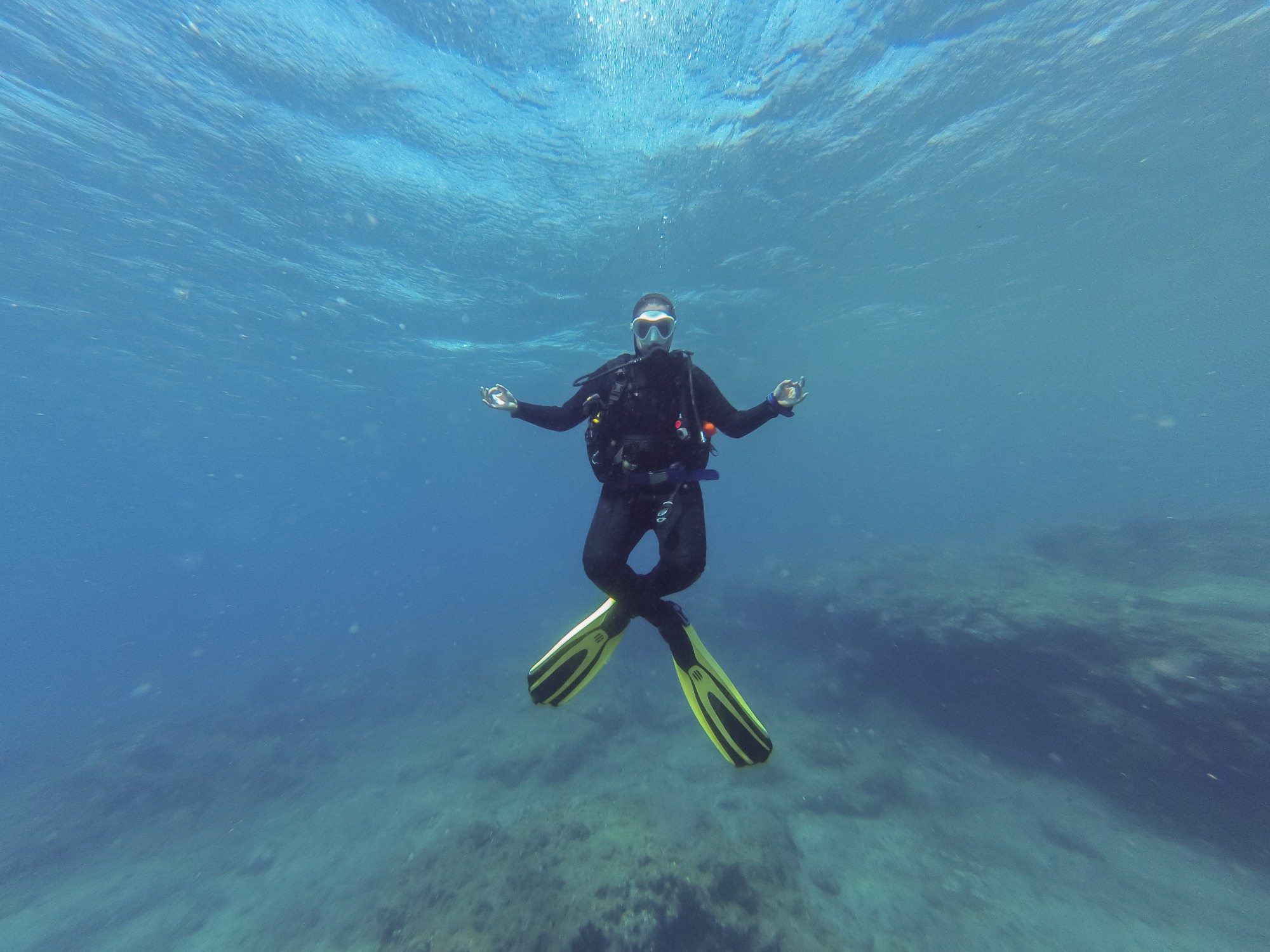
What do yoga and one of the world’s most technical sports have in common? They both require a hard deep breath. Ever wonder why strenuous exercise is beneficial for divers? It increases your red blood cell count and allows your body to hold oxygen for long periods. You can exercise via HIIT cardio and other forms of exercise, but yoga gives your body a stillness while holding deep breaths. Stretching your body’s use of oxygen will prolong your life support system and increase lung strength. Here are tips on why and how to practice yoga for SCUBA diving.

Work your Muscles

Working your muscles, particularly your lungs, allows your body to respond to deep breathing. Lung expansion means your lungs can hold more air underwater. Along with the decompression and contraction of the lungs, your ribs, pelvis, and spine need length and strength to allow room for deeper breaths. Pranamaya means breath control and is one of the main components of yoga. Breathing exercises require controlled yet deep inhalation. When you go SCUBA diving, the expanse of your lungs allows you to use more oxygen with less wasted energy. Your body’s surrounding muscles, including transverse abdominals, solar plexus, and thoracic, help your core and spine to protect the body and give you strength for submersion, surfacing, and carrying equipment throughout your dive. 

Focus and Awareness

Yoga increases the blood flow to your brain with pranamaya (deep breathing) and allows you to stay in touch with the body and mind. Dives require mental fortitude and strength. You can prevent dangerous situations by focusing on breathing. When you dive, you will need awareness to stay alert for any danger. If you are panicked or distracted, you increase your chances of being caught off guard or experiencing hypoxia. Clearing your mind for focus and stamina allows you to keep on top of problems before they begin.

Practicing Yoga for SCUBA Diving

The best yoga exercises for your SCUBA dive focus on deep breaths. While all of the yoga helps you practice pranamaya, some practices enhance your lungs’ capacity to utilize oxygen. To prepare the body for diving, practice the following moves. (Click a link to see how to perform each yoga pose.)

  • Mountain Pose– Stand tall in a natural and neutral stance. Raise your arms to the sky, breathe deeply pull in the belly button as you stretch up and back. Your chest expands as your waist and ribcage contain the air pressure. Your pelvis pushes downward as you control the impulse to pee.
  • Forward Fold– After you stretch in mountain pose, maintain a straight spine and solid core as you bend at your hips. The goal of the forward fold is to remain straight and gradually fold into a bend. Remain completely straight, inhaling from crown to tail until the chest and spine decompress. The movement will stem from your hips until you create a 90-degree angle with your body. Exhale as you slowly allow each vertebra of your spine to relax over your legs.
  • Upward Dog– Start at a downward dog with hands and feet on the ground and butt into the air. Keep your spine straight even if you have to bend your legs. Slide your head and chest down through your arms. Breathing in, claw your hands into the ground as you lift from your chest and pull your chest upward. Look forward as your pelvis and thighs dangle above the ground. Breathe out as you settle into the upward dog. Your thighs should be relatively close to the ground. Mastering the upward dog means your pelvis should be less than an inch off the ground, your chest forward and up, and your neck and upper spine are straight and aligned.
  • Half Standing Forward Fold– This move is like the forward fold, except you keep your spine 90 degrees from your legs. Remain bent and breath from the tailbone to the crown while tightening your kegel muscles. Allow your spine and chest to lengthen and decompress with each deep breath.  
  • Four-Limbed Staff Pose– Position yourself for a plank. Inhale deeply and maintain a straight line as you bend your elbows until your body is parallel and hovers over the floor. You will maintain a straight line from the heels to the tailbone to the crown. 

Remember your Breath

As you move into yoga, remember your breath. While going through your yoga exercises, inhale air with a tight core while pushing air into the pelvis, ribs, crown, and waist. Everything should expand and contract in unison. Focus on your breath with deep inhalations and controlled exhalation. SCUBA divers who want to improve their oxygen intake should consider a course in Nitrox air diving. Nitrox air is oxygen and nitrogen-rich, meaning divers can stay underwater longer. Contact By the Shore SCUBA Instruction for more information about Nitrox air and how you can use this air for your next SCUBA dive.

SourcesReunite With Your Breath | Yoga With Adriene – YouTube

Four-Limbed Staff Pose (Chaturanga Dandasana) How to do – YouTube

Most Overlooked Yoga Posture IMO – Ardha Uttanasana (Half Lift) – YouTube

How to Do a Standing Half Forward Bend – YouTube

Forward Fold: Am I Doing This Right?! – YouTube

How to Do an Upward Facing Dog | Yoga – YouTube

Yoga Poses to Master for Better Diving – Singapore Diving Review and News (diver. sg)

How yoga benefits diving. — Bouley Bay Dive Centre (scubadivingjersey.com)

Anatomy of breathing: Process and muscles of respiration | Kenhub

transverse abdominal muscles – Google Search

What Are Core Muscles – How to Build a Strong Core With Exercises (menshealth.com)

The Simplest Thing You’re Doing Wrong That’s Slowing Your Progress (linkedin.com)

Three New Marine Species Discovered 2022

Giant Isopod
Giant Isopod

This year divers have been able to get out more than usual. While there have been frequent discoveries of marine species, our oceans have been allowed to refresh, and animals have emerged from places we never imagined. The SCUBA community has been fortunate enough to participate in these recent discoveries of aquatic species. Wait till you hear the things emerging out of the ocean. Read about these three new marine species discovered in 2022. 

Anti-Freeze Fish

Can you imagine fish that perform the same way a radiator does? Glowing fish in the arctic produce their anti-freeze. Found off the coast of Greenland in 2019, these fish produce bioluminescence. Scientists were unaware of this anti-freeze property until now. After sifting through the RNA of the snailfish, scientists saw these anti-freeze proteins are in other animals in the arctic, including evasive reptile species. Ghulam Din Arctic fish is the official name of this cutting-edge scientific discovery. 

A New Species of Comb Jelly 

Duobrachium sparksae is the newly discovered species of comb jelly floating off the coast of Puerto Rico. NOAA classifies this as a species of comb jelly. Transparent and small, duobrachium sparksae resembles the comb jelly. Note that comb jellies are not related to jellyfish; (their phylum classifications are different.) This little floating wonder resembles a hot air balloon and walnut. They are not as dangerous to humans as jellyfish. The Smithsonian offers public access to high-definition videos of this finely detailed creature. Currently, scientists are uncertain of the role of the comb jelly in our ecosystem. 

“Alien” Isopod

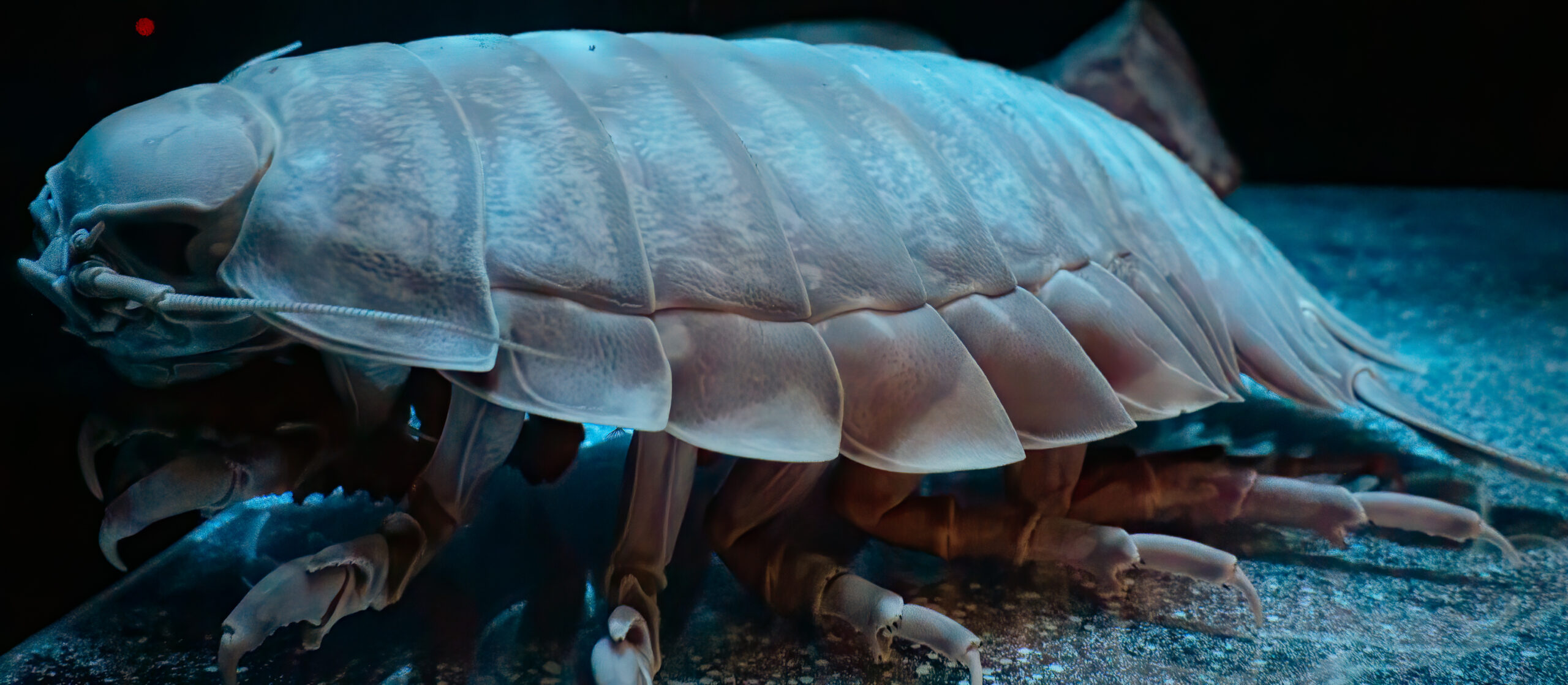
Ready for a creature that will make your skin crawl? The alien isopod or “face-hugger” lives in the Gulf of Mexico. The official name is bathynomus yucatanensis; bathynomus yucatanensis is a different species from other isopods. This isopod tops other isopods at a foot in size. Scientists believe the immense size of this isopod derives from its existence on the ocean floor. Other crustaceans and mollusks(such as giant squids) found on the ocean floor outgrow their peers who live closer to the surface. This phenomenon is known as gigantism, and scientists believe it is an evolutionary process that occurs deep down. 

Teeming With Life

Scientists are constantly discovering new forms of life in our oceans. There is no end to the possibilities of species we will find in the years to come. Protecting our biodiversity is vital to the continuing survival of our oceans. Follow organizations such as NOAA and Scripps Institution of Oceanography to stay up to date with environmental advocacy. Learning about our oceans will help you to become more familiar with different ecosystems. For more information on involvement as a PADI diver, contact www.volunteerhq.org. Head to your local PADI instruction company to find out if they know of any excursions to explore a new life. By the Shore, SCUBA Instruction is a PADI instruction company in Raleigh, NC. We stay updated on new oceanic discoveries and chart dive excursions to different locations.

SourcesNew species of giant deep-sea isopod found in the Gulf of Mexico (usatoday.com)

4 Recently Discovered Ocean Species – Ocean Conservancy

Fish ‘chock-full’ of antifreeze protein found in iceberg habitats off Greenland | NSF – National Science Foundation

Environmental Scuba Diving Volunteer Project in Lisbon | IVHQ (volunteerhq.org)

What Are Jellies? Cnidarians and Ctenophores | AMNH

Tiny new species of sea blob hovers ‘like a hot air balloon’ over the seabed | Live Science


SCUBA Diving in the Raleigh, NC Area

View of Lake Johnson, a popular city park in Raleigh, NC

With its large wild outdoors, urban industrial architecture, and rich history North Carolina is an attractive temperate state on the East Coast that offers almost anything to the adventurer. It is the perfect place to explore different periods of American history, scientific discoveries, modern architectural movements, and new businesses. There is almost something for everyone here. If you love the mountains, you can embrace the mountains of Blue Ridge. For the urban dweller, art museums, community events, and different architectural periods are proudly on display throughout the city. Oceanic lovers and maritime history buffs will find North Carolina waters are enchanting. The North Carolina coast draws lots of outsiders to its beaches. The surfing and PADI diving community is very prevalent here. That is why living in Raleigh is convenient for the urban dweller who wants to be close to the sea.

     If you are new to Raleigh, NC, and looking for unique SCUBA dives, you will find lots of enthusiastic PADI divers, historical treasures in the waters of North Carolina. Why is Raleigh number one in SCUBA diving? Because it is full of SCUBA divers, who are experienced, from dives all around the world!

You may be wondering if the Triangle is an ideal area for divers. Here is what you need to know about SCUBA diving around Raleigh, NC. Raleigh, North Carolina, and the surrounding area have plenty of SCUBA diving facilities.  By The Shore SCUBA Instruction is run by Kevin Alexander, our senior PADI instructor who has been SCUBA diving for over 25 years and specializes in underwater weddings. There are plenty of venues to practice your skills as Wake County has lots of swim clubs and diving pools. By The Shore SCUBA Instruction also can supply you with different diving equipment. 

Raleigh has large lakes and rivers.

Raleigh, NC, is abundant with history and offers archaeological dives worth investigating throughout rivers and lakes. The surrounding area has natural hot springs, massive lakes and offers diving getaways like Fantasy Lake SCUBA Park. 

Fantasy Lake SCUBA Park is a PADI divers playground. 

Fantasy Lake SCUBA Park, located in Rolesville, NC, simulates SCUBA diving scenarios like a cave, shipwreck, and open water diving. It is a quarry lake set up with underwater buses, mock shipwrecks, slopes, natural habitats, and deep holes to practice deep water diving. They offer training as well as open day and night dives. Hone your driving skills or take underwater selfies with an abandoned Beetle Bug car.

North Carolina is full of artifacts. 

     Not far from the Raleigh area are beaches and coastal waterways full of history. The list is endless. Features of the North Carolina coast include megalodon teeth, the Lost Colony, the original Outer Banks colony settled by early English settlers from the Old English era, Civil War artifacts from Fort Macon, Blackbeard “Edward Teach” the pirate, lots of shipwrecks, and more. You will hear of Ghost Fleet diving expeditions where you can chart the World War II ship graveyards, and potentially spot a whale over the winter.

North Carolina is full of large marine species under the sea.

     If you are looking for a marine biology experience, look no further than North Carolina. Wilmington, North Carolina offers marine biology diving from the University of Wilmington so, it is apparent that the wildlife is abundant. If you want to see large marine wildlife, the United States has listed North Carolina as #1 in North America for large marine life. The sand tiger shark draws the most attention as it is prominent in the North Carolina waters. Immerse yourself into a deep dark world surrounded by the shy yet intimidating shark who lurks near the NC coast. Sea turtle lovers will find memorable moments during the late Spring and Summer. If you like mammals, Porpoises and dolphins are abundant in the cold Winter waters of North Carolina. Kure Beach has several archaeological dives due to the high number of Megalodon teeth findings. Are you interested in the Coastal Waterways? Dive the Cape Fear River if you dare, and see if you can find alligators migrating back to Florida in Late Winter/Early Spring. For creature enthusiasts, these remarkable sightings are only a few hours or so away from Raleigh’s epicenter.

  If you need a support system for SCUBA diving Raleigh, North Carolina has a great community of divers. Since it is considered Eastern North Carolina geographically, most PADI-certified SCUBA divers in the area are experienced, open ocean divers. Though the waters can be cold and rough at times, it won’t keep us from exploring. Stopover at By the Shore SCUBA Instruction and see how we can help you maximize your next dive in North Carolina.