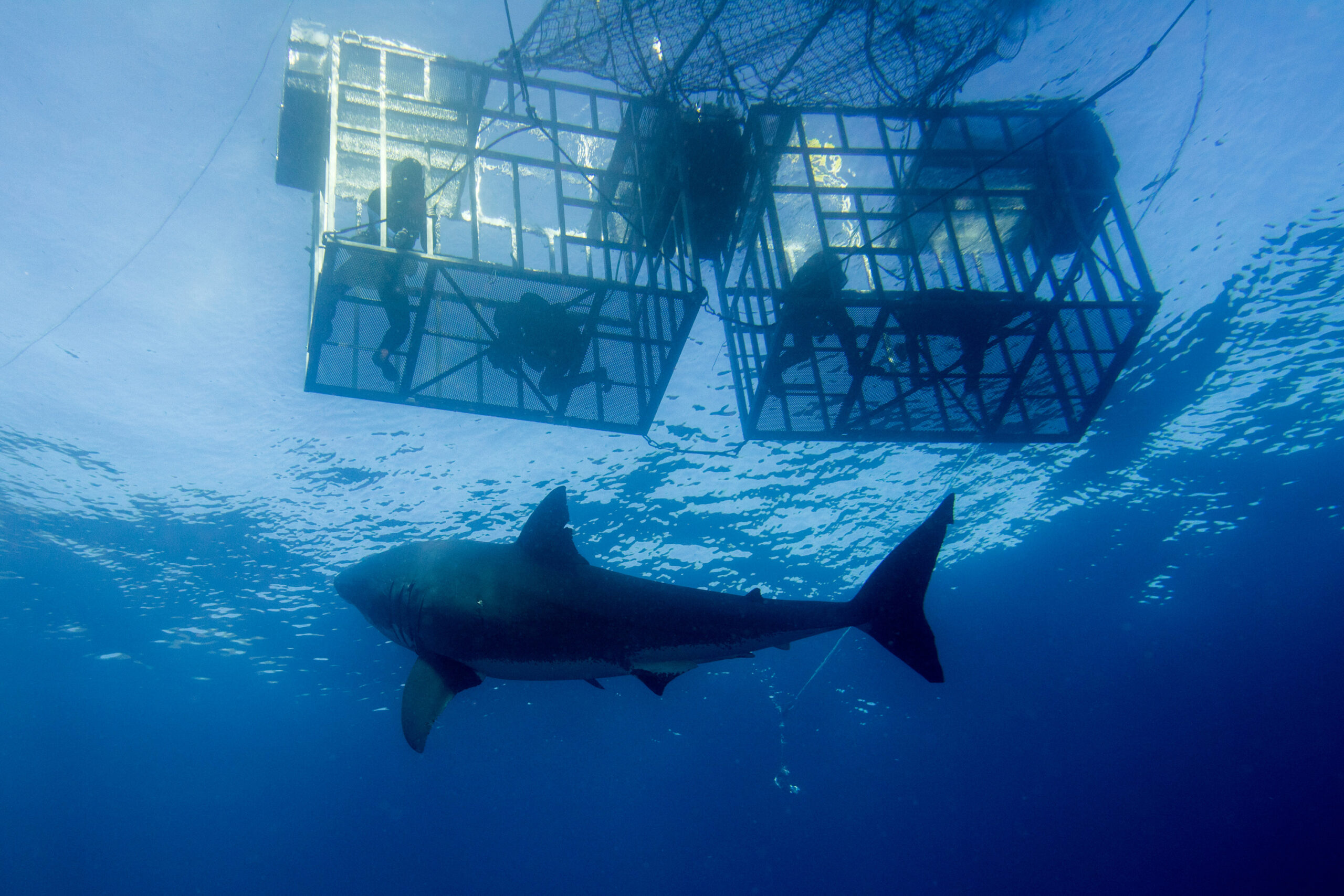
Surviving a Shark Attack While Cage Diving

Great White shark while coming to you on deep blue ocean background

Have you ever dared to cage dive with the Great White off the coast of South Africa or even in the Bahamas with the Caribbean Reef Shark? Most divers have never been on a cage dive with sharks, but the few who have looked death in the face. Sometimes the sharks are a little aggressive. Sometimes they seek blood. Do they seek to attack cage divers? There has never been a death by cage diving with sharks ever recorded, but this doesn’t mean sharks have never attacked cage divers. A conflict arose when a great white plowed into a cage with Mark Currie during a cage dive off the coast of South Africa in 2005. The boating company tried to launch a lawsuit against the British tourist when they said he damaged their equipment. In addition, they held a lawsuit against local media outlets for exaggerating the news story. You would think that Mark would have sued the company, but he described the incident as the most exciting experience of his life. Was Mark merely trying to receive fifteen minutes of fame, or was his near-death experience so exhilarating he had to share it with the world? We may never know. We do know that sharks have attacked cages before, and sharks have attacked divers in the open ocean. Those two facts together are enough to place any cage diver on edge.

Precautions to Take when Cage Diving

Most of us would not be thrilled if a shark plowed into our cage. So how do you survive or prevent a shark attack? Some cage diving companies consider safety, while others use chum to lure sharks in. There have even been ethical debates concerning cage diving. Read these precautions to take when cage diving and decide for yourself. 

  • Chart a cage diving company that does not use chum to lure sharks towards the boat. The best cage diving tour guides know where the sharks are. Using chum to draw the sharks in takes away their fear of humans. 
  • If the conditions are murky in the water, it’s best to steer clear of these areas. Avoid areas with chum in the water. (See above.)
  • There is strength in numbers. Take a dive buddy with you.
  • Ensure your lines and tubes are correctly tied and gathered to avoid a shark taking hold of you. 
  • Keep one hand on the cage as you climb down inside. This practice ensures you can quickly pull yourself inside if a shark approaches.
  • Use the controlled seated technique to get inside the cage. Your cage dive team should demonstrate it. You use both hands to pull yourself down into a seated position. 
  • If you want to take photos, climb into the cage first. Then have someone hand you your camera. Otherwise, you cannot hold onto the cage bars as you descend. 
  • Avoid a collision with your dive buddy. 
  • Never extend cameras or limbs outside the cage, which the shark considers bait.*
  • Remain calm at all times. Movement can disturb the shark. 
  • Take a diving knife in case you become stuck or trapped by your equipment.

These tips are helpful to prevent a shark from noticing you, but what if they can’t resist plowing into your cage. If you find yourself close to the abyss of a shark’s jaws, you can still escape if you act fast and follow the tips below.

  • Keep your eyes on the sharks at all times. They are less likely to approach if they know you are watching them. 
  • If a shark pushes into a cage, sinking below or above them is your best chance of survival. Sharks cannot swim backward, which means they will be thrashing around with you inside the cage.
  • Most cages have an exit hatch in case of a shark attack. Ask the charter to show you how to operate the escape hatch before diving.
  • Once you exit the cage, be mindful of other sharks lurking nearby.
  • If you need to exit the cage from deep levels, open the cage and exit quickly with your dive buddy. Inflate your BCD and swim to the top with your dive body. 

While there is no guarantee that you will survive a shark attack, your chances of survival are greater if you follow the tips above. The best way to prevent death by cage diving is to speak with your SCUBA instructor; they may be able to offer you a course in cage diving. If you have any questions about cage diving, contact By The Shore SCUBA Instruction.

*This statement above is based on accuracy but is inserted for dramatization.

By the Shore SCUBA Instruction is not certified to offer advice concerning marine animal behavior. The advice above is not guaranteed to stop injury or death from occurring. We write this article based on the experience of individuals, divers, cage dive charters, and others who work directly with sharks. You attempt cage diving at your own risk to life and limb. 

Sources- 

Shark Cage Diving Safety Tips – Shark Bookings

Extreme Great White Shark Cage Attack | World’s Scariest Animal Attacks – YouTube

Tourist who escaped shark attack faces legal action | The Independent | The Independent

Shark experts set to sue media | News24

Is it Ethical to Dive and Swim with Sharks? (worldnomads.com)

Equipment For Scuba Diving: An Illustrated Guide For Beginners (diverbliss.com)

The Best Way to Escape a Shark When You’re ’47 Meters Down’ (inverse.com)

Do I Need to be Scared of Sharks while Diving?


 From the depths of the ocean, the worst feared creature is the shark. Whenever we think of sharks the first image that plagues our minds is Jaws or Great Whites. Shark experts have said there is no need to fear the shark since we are not its natural prey. With warnings towards bleeding or splashing in the water, we still are not completely at ease with these territorial creatures. The question is even more pressing for those wishing to dive out in the open ocean where shark numbers increase from the occasional sandbar drifter. 

  Instead of asking “Do I need to be scared of sharks while Diving?”; ask “Is it dangerous to dive with sharks?” or “Which sharks are dangerous?”

The answer to that question depends entirely on the situation. There are many ways to avoid and prevent shark attacks. Fear is not one of them. Keeping a level head, and knowing the facts will help keep you out of harm’s way.

Adverse Conditions

     Divers must keep in mind that certain conditions are harmful to everyone, even shore dwellers. Conditions in the water that attract sharks are the following:

  • Dawn or dusk. These times are feeding times for the sharks and most charters leave in the broad light of the morning and board before the sun starts to set. Even though feedings are usually around the sandbar, the risk of a shark encounter is higher for shore swimming and people out in the open ocean. Most shark attacks have occurred between 8 am and 6 pm, but that is because humans crowd the waters more between these hours. Most people steer clear of the seas before and after this time frame. 
  • Stormy waters or after the storm. If storms blow through you can guarantee that will stir up trouble. Unlike dolphins who prefer calmer waters to make guest appearances, sharks prefer the rough waves. Rough waves stir up ocean prey and attract sharks to the action. 
  • River openings and canals. Wherever freshwater meets saltwater you are more likely to be spotted by a shark. You would assume otherwise given the idea that sharks mainly go out into the deep seas. Canals and river openings can be deep and are especially dangerous after a storm as debris and freshwater fish flock to the area. Shark sightings are especially common in these debris-ridden areas.
  • Murky waters, waste, sewage, or fishing piers. Murky waters allow limited viability for divers. Certain places like the Northern Atlantic are murky due to silt, debris, limited light, and large seaweed content. Waste, sewage, and fishing piers attract sharks with the smell especially since sharks are looking to feed on flesh. Human waste can be mistaken for fish food or attract ravenous hungry sharks. Most diving boats are in the middle of the open ocean, just ensure that there is no garbage barge or fishing boat nearby. Also going to the bathroom in the open ocean is not ideal. 

High-Risk Areas

  • Florida and East Coast United States. Most Shark attacks occur in the highly populated counties of Florida on the East Coast for obvious reasons. Bull sharks which are one of the most aggressive shark breeds are brought there by adverse conditions. They also reside in the Gulf but are easier to spot in the calm waters. With more people flooding Florida’s East coast the risk of an attack rises. The other Eastern States like South Carolina and the darker waters of North Carolina are murky and tend to have more swimmers out in the warm seas. New England has fewer reported shark attacks because of the less frequented beaches, however in pre-modern times when people traveled fewer shark attacks increased when unsuspecting people splashed around the shark-ridden seas. Great whites have also been known to vacation here in the Summer. 
  • Queensland and South Wales Australia are home to the Great White which have been known to kill humans and are rumored to like the taste of human flesh. If you enjoy diving with Great Whites this not be a negative, but make sure you take certain precautions while diving with these demons of the deep. 
  • California and Hawaii. The Pacific Ocean attracts the Great White and also has a high human population which attracts more sharks. If you are diving though don’t stress as long as you can see what’s coming. 
  • Papua New Guinea. Papua New Guinea is well known for spearfishing and unfortunately, this attracts many carnivorous sharks. The likelihood that a diver will be attacked is lower than that of a fisherman who spears dives. However, ensuring your surroundings are safe is first and foremost important. 
  • Brazil is known to have the most shark attacks due to its high populations. Keep an eye out if you are diving near populated shores.
  • South Africa is known for the highest attacks and is the Great White dive capital.

Dangerous behaviors

  • Splashing, urinating, and bleeding all attract sharks.
  • Diving with Great Whites puts you at risk, but well-engineered cages can keep you separated from these great fish. Ensure that you chart your Great White dive with experienced charters who have a good reputation. 
  • If you happen to encounter a shark, and cannot get away try pushing back on them. This will usually intimidate them. However, if a shark is aggressively approaching, stand your ground and punch them in the face. If this does not work grab them by the gills or poke them in the eyes. The more you attack their senses and the harder you hit the more you are not worth the bite. 

Breeds that are Attack Unprovoked

  • Great Whites, Bull Sharks, Tiger Sharks, and Oceanic Whitetips are known for attacking unprovoked. Not all the Whitetips and Great Whites have been recorded, but historical accounts of random attacks are common. 
  • The Great White will usually attack humans if they cannot find enough fish to sustain their hunger.
  • Bull Sharks and Tiger Sharks are very territorial and will attack for you invading their waters. They do not like competition of any kind and will go out of their way to attack a peaceful bystander who is in their surrounding fishing ground. 
  • Bull sharks and Tiger sharks are more likely to be angered by your presence, but Great Whites and Whitetips are looking for food.

Shark presence in the ocean is inevitable. Looking for an experienced charter and avoiding dangerous conditions will lower the risk of a dangerous encounter. If you want a radical Great White encounter try to pick times when the shark has finished feeding to climb into the cage. This way you can experience nature and still limit dangerous exposure to the ocean’s greatest carnivore. If you wish to plan a safe adventure drop by to speak with Kevin at By the Shore SCUBA Instruction.*

*By the Shore SCUBA Instruction offers courses on SCUBA safety and full PADI certifications from certified PADI instructors. We are not certified to work with or handle animals. Our information regarding sharks is drawn from the expertise of marine biologists and personal experience. We are not marine biologists and do not guarantee that divers will be safe from any marine wildlife attack. Any diver must assume the risk of a shark attack, and choose to research a reliable charter as to lower their risk of death or bodily injury.