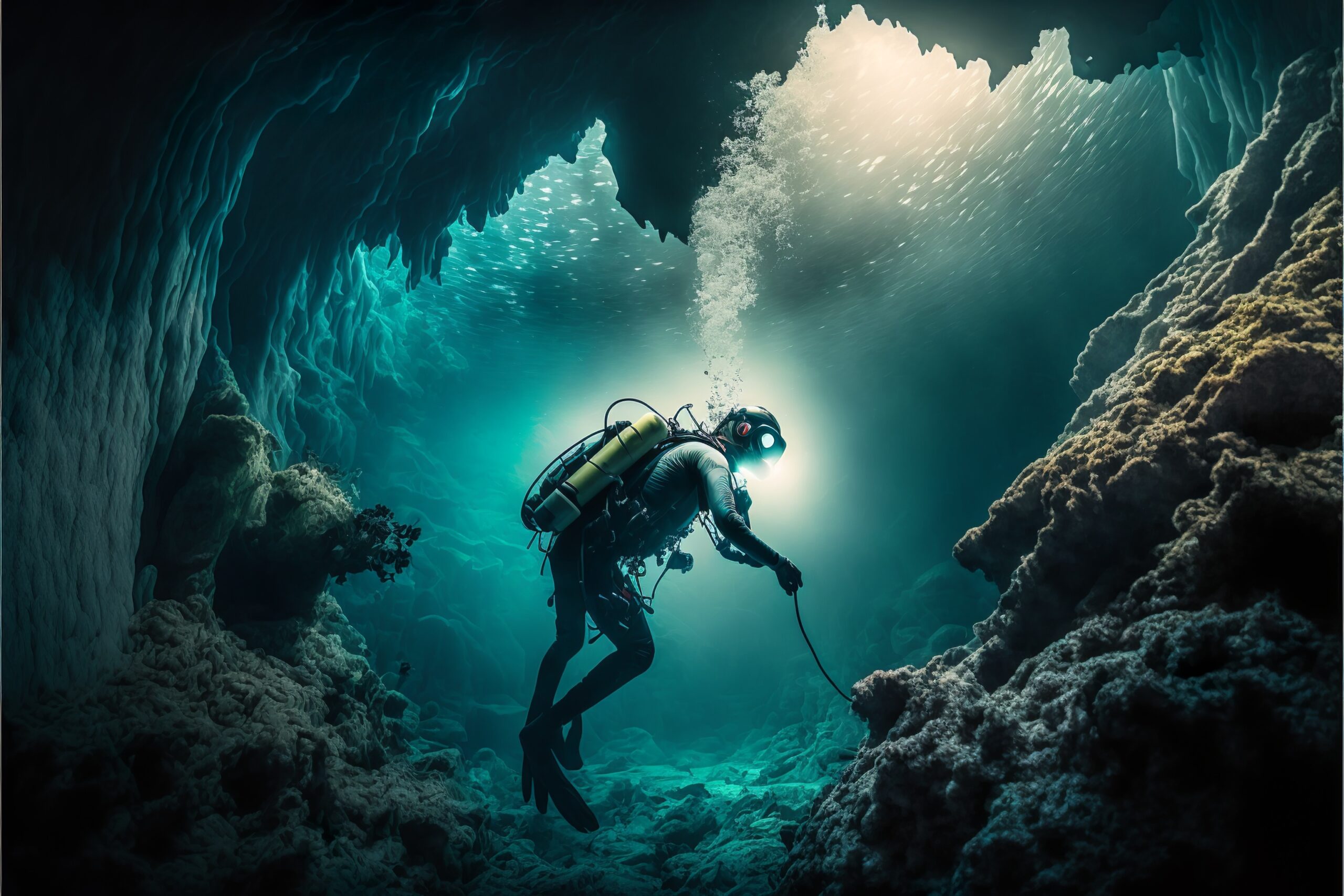
The forbidden has always appealed to our sub-nature. For divers, our adventurous spirit may find its way toward the road less traveled. These locations are alluring, beautiful, and possibly lethal. Take our advice, and dive into these forbidden locations at your own risk!
The Blue Hole of Dahab
Located in the Red Sea, this infamous dive is known as a diver’s cemetery. It is a submarine sinkhole that reaches depths of approximately 141 meters. The main attraction of this dive is the arch, a passageway to open waters located about 56 meters below the surface. Plenty of divers have lost their lives trying to reach or cross the hook due to nitrogen narcosis, decompression sickness, or running out of air. It is only wise to enter if you are an expert technical dive. These divers use unique gas mixes and follow strict decompression protocols.
Temple of Doom
Cenote Calavera (or Skull Cave) is the peak of the Temple of Doom in Mexico and contains a multi-layered halocline. These halocline structures give the cave a spooky look and break off. Three circular openings and a wider oval opening create the skull look at the entrance giving this dangerous cave its name. Cenote Esqueleto, a notorious hole in Tulum, Mexico, features a cavern maze, making navigating difficult and dangerous. It’s not hard to become lost and disoriented inside this underwater labyrinth. Divers must have excellent buoyancy control and cave diving skills to avoid stirring up the silt and reducing visibility.
Chuuk Lagoon
This lagoon in Micronesia was once the main naval base of the Japanese Empire during World War II. In 1944, the U.S. Navy attacked and destroyed this base, sinking over 60 ships and hundreds of aircraft. Today, Chuuk Lagoon is one of the world’s most famous wreck diving destinations, offering divers a chance to see History frozen in time. However, diving in Chuuk Lagoon has risks. Many of the wrecks reek with explosives, such as bombs, grenades, mines, torpedoes, and depth charges. These explosives can be unstable and potentially detonate if disturbed by divers. Moreover, some deep wrecks require advanced diving techniques and equipment.
Devil’s Ear
This dark, ominously named dive site dwells in Ginnie Springs, Florida. It is part of a complex cave system that connects several springs and rivers. The entrance to Devil’s Ear is a narrow opening that leads to a large chamber with a strong current. Divers must fight against the current to reach a tunnel that descends deeper into the cave. The water temperature is frigid, and the visibility is very low due to tannic acid from decaying vegetation. Divers must also be careful of hydrogen sulfide gas pockets that cause nausea and headaches.
The Shaft
This giant cave system’s entrance is through a tiny hole in the middle of a field in Mount Gambier, Australia. It leads down a narrow 8-meter-long shaft to a water-filled cave from which two tunnels, one at either end, descend to depths of 85-120 meters. The tunnels contain stalactites, stalagmites, and other formations that create stunning scenery. However, they are also very dark and narrow, requiring divers to use reels and lights to navigate. The Shaft is only accessible to experienced cave divers with special permits from local authorities.
Chart an Excursion
These locations are off-limits to the casual SCUBA diver. For information on charters and exciting tours that are not high-risk, contact By the Shore SCUBA Instruction to see when our next excursion is. You never know what we’ll boil up next. Right now, we are sticking to beautiful paradise locations. For all others, dive into these forbidden locations at your own risk.*
Disclaimer:By the Shore SCUBA Instruction claims no responsibility for death or injury incurred on diving in these locations. We provide this information for the inquisitive diver, but cannot guarantee your safety if you chose to dive in these locations. There is a likelihood of injury or death from SCUBA diving regardless of safety precautions taken. Dive at your own risk.
Sources-10 Most Dangerous Dive Spots – MapQuest Travel
10 Deadliest Places to Scuba Dive – Listverse
The Blue Hole of Dahab on Egypt’s Red Sea is a diver’s cemetery. (slate.com)
Chuuk Lagoon – History and Facts | History Hit