
The Underwater Environment: A Natural Mental Reset
Stress is not an occasional experience; nowadays it is becoming part of daily life for most people. Working hours, the constant availability of the Internet, and the constant responsibilities make it difficult to disconnect. Such common interventions as exercise, meditation, or short holidays may provide temporary relief but do not necessarily provide a complete recharge of the mind. The majority of people do not require a vacation but a complete change of the landscape, something that will stimulate the brain enough to quiet the mind and restore emotional balance.
How to Use Scuba Diving for Stress Relief and Emotional Wellness
Scuba diving offers exactly that. It is not just a practice or a hobby; it is an experience that makes you forget the stress of daily life and puts you in a totally different world. This change is what makes scuba diving particularly helpful in the context of stress relief and emotional well-being.
The Underwater Environment: A Natural Mental Reset
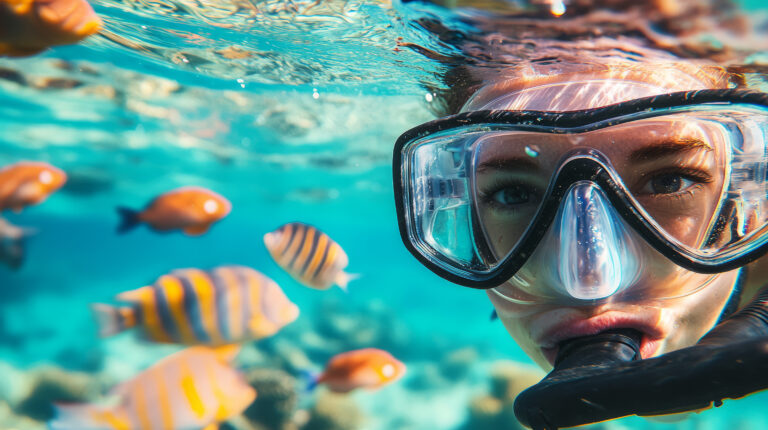
The most immediate benefit of scuba diving is the diving environment itself. When you go underwater, the world is more silent, slower, and more managed—no phone calls, no chats, and no external distractions that are competing to grab your attention. Instead, you are surrounded by open water, steady movement, and a sense of relaxation that is difficult to get in other places. It is not just a physical change, but it directly affects the brain’s response. The brain will not be capable of maintaining the rate of constant stimulation. This is what most divers call one of the rare moments in a long time that they feel truly present and not distracted. Scuba diving has a deeper mental separation from stress than surface-level relaxation techniques.
Controlled Breathing and Its Psychological Impact
The way in which it regulates breathing is one of the reasons why scuba diving is effective for emotional wellness. Breathing in the water is no longer automatic or rushed, but is now slow, deliberate, and controlled. Each inhalation and exhalation may be experienced, and it creates a pattern that is rather comparable to guided breathing exercises, which are used in therapy and meditation. There is a direct physiological effect of this controlled breathing. It helps in slowing down the heart rate, reducing stress hormones, and gaining a sense of relaxation. As time goes by, divers learn to be more aware of their breathing patterns, which they can apply when they are not in the water during stressful moments. This is one of the reasons why scuba diving does not just provide temporary relief; it helps to establish emotional control in the long term.
Learning Focus Instead of Escaping Stress
The majority of stress relievers are focused on distraction, forgetting about the problems in the short run. Scuba diving is different. It requires attention, awareness, and concentration. Divers must check depth, control their equipment, look around them, and communicate with their partner in the dive. This concentration is what moves the mind away from overthinking and toward deliberate awareness. The brain is fully engaged in the current moment instead of revisiting the same issues or worrying about the future. It is a psychological change that is particularly helpful to individuals who struggle with anxiety or mental clutter. It is interesting to note that this is not a forced concentration. It is also more long-term and sustainable because it is created naturally as a component of learning to dive.
The Emotional Effect of Being Underwater
Another important thing that is underestimated is the emotional aspect of scuba diving. Scuba diving creates a sense of perspective due to the presence of marine life and underwater scenery. The problems that appear to be terrifying on the ground might not be the same when observed in an entirely different environment. An encounter with sea creatures, be it a school of fish or a slow-moving sea turtle, tends to leave one curious and relaxed rather than rushed. Such experiences encourage a more reflective and quieter mind. This would help individuals in the long run to react to stress more emotionally in a balanced manner.
Physical Engagement That Supports Mental Stability
Although scuba diving is not viewed as an exhausting activity, it engages the entire body. Swimming requires coordination, balance, and effort. In the meantime, the buoyancy of water reduces the physical load; therefore, it can be used by people of different fitness levels. This is a combination of physical and mental focus that results in well-being. Physical engagement helps in alleviating tension built up in the body, and the slow pace of the movement helps one not to be overstimulated. Therefore, divers are physically and mentally relaxed following a dive.
Why Learning to Dive Changes the Experience
It is necessary to understand that all the benefits of scuba diving can be achieved by means of active learning and practicing scuba diving, and not by observing only. Enrolling in scuba diving classes augments the experience by adding structure, direction, and confidence. The idea of going underwater may be new or even a frightening thought for beginners. However, professional training breaks the process into manageable steps. You learn how to breathe, how to operate the equipment, and how to move about freely underwater. Confidence increases as the sessions go on, and the uncertainty that existed at the start is replaced by a sense of control. This development is important from a psychological point of view. It is possible to overcome the initial hesitation and learn new skills to gain self-confidence and emotional strength. It is also not only about diving but also about acquiring skills to stay calm and effective in a new environment.
Social Connection Without Pressure
The other advantage of scuba diving is the type of socializing that is encouraged. Diving is usually done in pairs or small groups, but unlike most social settings, one does not have to talk all the time. Communication is minimal and deliberate, and it is normally through simple signals. This forms a special equilibrium connection without pressure. It is not a requirement for you to be socially active, but you are still part of a common experience. This may be of great assistance to mentally drained individuals due to societal demands. The typical diving experiences tend to lead to meaningful relationships of trust and support with time.
Why Scuba Diving Is Worth Trying—Even If You’ve Never Considered It
It is natural to feel confused because you have never considered scuba diving. The majority of people feel that it is for seasoned swimmers or adventure seekers. In fact, scuba training in the modern world is directed at beginners, and the overwhelming majority of people can learn safely with the right guidance. The disparity between scuba diving and other activities is that it can combine various benefits into a single activity. It is not just relaxing, not just physical, not just mental, but it is all these things in a way that is natural and not artificial. This combination is what makes scuba diving particularly effective for individuals who are seeking an effective way of coping with stress and improving emotional health.
Take the First Step Toward a Calmer Mind
If you are looking for a practical and effective way to reduce stress and a sustainable way of relieving stress, improving concentration, and regaining emotional balance, this is for you. It is not only a temporary relaxation, but it also helps to develop skills and habits that would help with mental health in the long run. This process can safely and comfortably begin by taking a formal scuba diving course. One can change direction to a professional career, become more competent, less stressed, and more controlled and calm. The underwater world gives you a place where you can increasingly have an opportunity to disconnect, reset, and reconnect with yourself. If you are looking for a reputable SCUBA diving course, contact By the Shore SCUBA Instruction run by experienced PADI master Kevin Alexander.
Sources-
https://www.naui.org/scuba-diving-mental-health-benefits
https://pmc.ncbi.nlm.nih.gov/articles/PMC5741699
https://www.stuartscuba.com/blog/dive-tips/how-scuba-diving-helps-heal-stress-anxiety-and-ptsd
https://pmc.ncbi.nlm.nih.gov/articles/PMC8823687
https://pmc.ncbi.nlm.nih.gov/articles/PMC7579011
https://inpact-psychologyconference.org/wp-content/uploads/2025/05/202501P004.pdf