
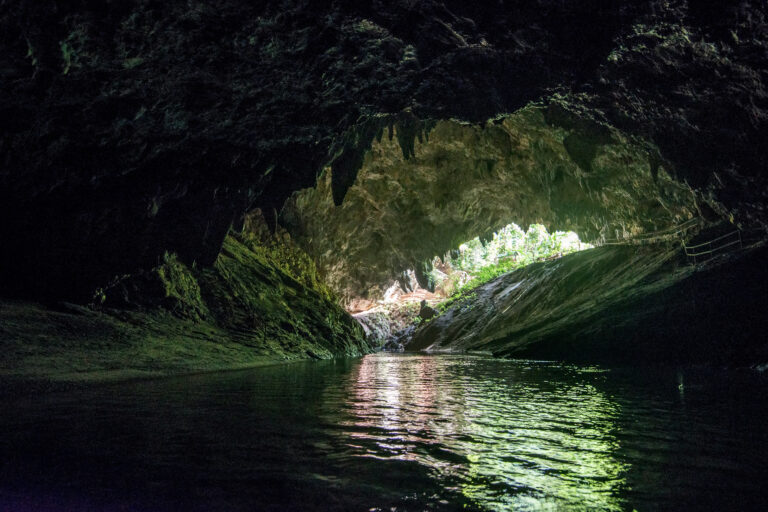
How Twelve Young Boys and their Coach were Caught in one of Thailand’s Best-Known Cave Systems
On June 23, 2018, twelve young boys and their soccer coach entered Tham Luang Nang Non, a cave system in northern Thailand. What may have seemed like an ordinary adventure after soccer practice became a terrifying struggle for survival when monsoon rains flooded the cave and cut off their way home. Even after the rains stopped, the passages remained flooded, cutting the boys and their coach off from the outside.
The Thailand Cave Rescue
As the night fell, concerned parents noticed a lack of communication and contacted the authorities. Park rangers and neighbors began a frantic search and found their backpacks, bicycles, and belongings at the mouth of the cave. With only a short supply of lights and snacks to sustain them as they balanced on a muddy ledge, they had to find a way out of the cave.
Cave Diving as A Rescue Route
The morning after, when the cave remained submerged in certain areas, the Siam Rescue Team and Chiang Rai volunteers brought equipment to the mouth of the cave, but realized it was not enough to reach the boys and their coach. They needed additional measures to rescue the boys. On Monday, June 25th, 2018, Royal Thai Navy SEAL cave divers were deployed to reach them but were confronted by flooded passages, powerful currents, darkness, and water so muddy that visibility could disappear almost completely. In a desperate attempt to rescue their own, the Thai government issued an SOS around the world, as an all-hands-on-deck effort was used to summon about 10,000 hands from around the world. About 100 to 200 of those were divers.
Experienced Divers from all Around the World
Experienced cave divers later described situations where they could not even see their own hands. They had to follow guide lines by touch and memory rather than by sight. On Wednesday, June 27th, British cave divers John Volanthen and Rick Stanton arrived on site along with Thai SEALS that day to begin the cave rescue.
What They Found
The divers surfaced at air pockets and eventually reached the muddy ledge where the group was sheltering. For a moment, the cave rescuers had an answer to the question the world had been asking: Were they alive? The famous footage of that encounter shows the boys responding to the divers as they realized that help had finally reached them. But finding them was not the same as rescuing them. That distinction is what makes the story so terrifying.
Complications After the Discovery
The boys were alive, but they were trapped more than a mile inside a cave containing flooded passages that they could not safely cross on their own. The water was still a threat, and oxygen levels inside the cave were falling. Plans were considered to wait for the water to recede, drill into the mountain, or supply the boys with enough food to survive until conditions improved. However, waiting for the water to recede could have taken several months, creating serious problems involving oxygen, food, sanitation, hypothermia, health, and further flooding. Further heavy rain during the rainy season could have raised water levels and worsened the danger. Only one other choice remained: extract the survivors.
Sedation as A Means of Cave Rescue
After other options were considered or eliminated, the cave rescue leadership, including medical specialists and cave divers, adopted a plan to anesthetize each person with ketamine and extract them using full-face masks and divers. To prevent drowning or panic, they would administer a cocktail of sedatives to rescue the boys. Ketamine was used as a general anesthetic because it could be administered intramuscularly and generally preserves spontaneous breathing. The operation still carried major risks, including airway obstruction, aspiration, hypoxia, and mask failure.
A Trail of Oxygen Tanks
Realizing that the distance between the cave opening and the muddy ledge was 2.5 kilometers, with over 1 kilometer underwater and half a mile fully submerged, the Royal Thai Navy SEALs and International cave diving specialists realized they would have to line the cave with oxygen tanks to refuel along the way. Then the unthinkable happened. As he was lining the cave with tanks, Navy SEAL Saman Kunan succumbed to asphyxiation while delivering air supplies along the route. His death changed the emotional reality of the cave rescue. If a highly trained, experienced diver could die inside the cave, how could twelve children, unfamiliar with cave diving, possibly make the journey out?
Executing The Cave Rescue
The plan was unlike anything most people could imagine. The children were given medication to keep them calm and were fitted with full-face diving masks. Experienced divers accompanied them through the underwater sections, while additional cave rescuers waited at different chambers to help move them through the cave. The rescuers had to work almost like a human chain, transferring the children through sections of water, rocks, mud, narrow passages, and darkness.
Moments of Doubt
Even then, there were moments when the cave rescue could have failed. One of the divers struggled to seal a mask properly on one of the boys. The seal was a serious concern because a failure underwater could have been fatal. Other rescuers became disoriented in the darkness. Visibility deteriorated so badly that divers sometimes could not see the rocks until they physically struck them. Despite uncertainty the cave rescue team pressed on.
The Last Person Rescued
Dr. Richard Harris, the Australian physician and cave diver who played a central role in the operation, spoke of the overwhelming uncertainty that everyone would survive. Every rescue attempt seemed nearly impossible, yet between July 8 and July 10, all twelve boys and their coach were brought out alive. Just hours later, the primary pumps failed, and the cave began rapidly refilling with water. The rising floodwaters barely missed the remaining cave rescue crew, washing away headlamps as workers scrambled to safety.
Sacrifices Made
Though everyone in the cave escaped that day, the mission ultimately claimed another life: Petty Officer 1st Class Beirut Pakbara passed away 17 months later from a blood infection he contracted during the cave rescue. Along with Saman Kunan, his sacrifice was part of the heroic efforts that resulted in every child returning that fateful day to their parents.
Fatal Risks in High-Stress Operations
Training, communication, equipment, guidelines, medical preparation, redundant air supplies, coordination, and knowing when conditions are changing can determine whether a cave rescue becomes possible—or impossible. The Thai cave rescue is often remembered as a story of triumph, and it certainly was, but it was also a story of sacrifice. Saman Kunan did not come home. Other rescuers came frighteningly close to disaster. The boys survived partly because hundreds of people—Thai citizens, international divers, military personnel, doctors, engineers, volunteers, and local communities—worked together.
How Saman Kunan Lost Oxygen
How an elite diver runs out of air comes down to gear and exertion. Saman Kunan used open-circuit scuba equipment, which vents exhaled air and holds a strictly finite supply—unlike a Closed-Circuit Rebreather (CCR) that recycles oxygen. To reach the boys, divers navigated a mile of flooded caves, including a squeeze at Monk’s Junction where tanks had to be unclipped and pushed ahead. Hauling heavy cylinders through dark, cold currents caused intense physical strain, driving Kunan’s breathing rate up and drastically accelerating gas consumption beyond his planned reserves. On his return to Chamber 3, his air ran out. He lost consciousness along the guide rope and asphyxiated underwater, illustrating why overhead environments require strict gas management like the Rule of Thirds. All this information is based on reviews and observations by Rear Admiral Arpakorn Yookongkaew, John Volanthen, Rick Stanton, and Jason Mallinson.
Gear Can Save Lives, But It Has Its Limits
To avoid running out of air in dark, underwater caves, divers rely on specialized gear. Many use Closed-Circuit Rebreathers (CCRs), which recycle exhaled air so it lasts hours longer, or sidemount setups, which let divers unclip air tanks to squeeze through tight spots. Combining this gear with the Rule of Thirds—using one-third of your air to go in, one-third to get out, and keeping one-third for emergencies—gives divers a crucial safety net. Yet no equipment is bulletproof. Freezing water, extreme fatigue, and sheer panic cause divers to breathe faster, draining air supplies far quicker than planned. Even high-tech rebreathers can fail in narrow spaces. Gear creates a vital buffer, but calm decisions and strict safety rules are what ultimately bring a diver home.
Ensuring Safety as A Diver
While the extensive training of the Thai Navy SEALS and international divers takes years and specific focus, SCUBA divers need to be prepared for safe diving as well. Regular SCUBA divers can protect themselves by following three core rules:
- Manage your gas: Use the Rule of Thirds—allocate one-third of your air supply to go out, one-third to return, and keep the final one-third strictly in reserve for emergencies.
- Check your gear: Always dive with a trusted partner and complete a thorough buddy safety check before entering the water.
- Know your limits: Never enter overhead cave, deep wreck, or decompression environments without advanced technical training.
Keeping Your SCUBA Skills Up To Date
Always monitor your dive computer, ascend slowly, and complete a safety stop to prevent decompression sickness. To stay safe underwater, you must continually practice and follow proper scuba guidelines. Enrolling in structured training is the best way to keep your skills sharp, and By The Shore Scuba Instruction offers comprehensive courses tailored to all levels. Whether you need a beginner certification or a Refresher Course to brush up on safety protocols, these classes build the confidence needed to dive responsibly. Prioritize your safety and explore schedules today at By The Shore Scuba Instruction.
Sources-
-https://diveraid.com/gas-management-101/
-https://en.wikipedia.org/wiki/Sidemount_diving
-https://www.bbc.com/news/world-asia-44791998
-https://www.thehindu.com/news/international/thai-cave-rescue-a-timeline/article24381676.ece
-https://www.cnn.com/2018/07/10/asia/thailand-cave-rescue-timeline-intl
-https://allthatsinteresting.com/thai-cave-rescue
-https://www.businessinsider.com/thai-cave-rescue-timeline-how-it-unfolded-2018-7
-https://time.com/5331817/thailand-cave-rescue-evacuation-begins/
-https://www.bbc.com/news/world-asia-44695232
-https://www.bbc.com/news/world-asia-44838803
-https://pmc.ncbi.nlm.nih.gov/articles/PMC7481118/
-https://globalnews.ca/news/5332341/thai-cave-rescue-would-fail/
-https://www.dfat.gov.au/crisis-hub/thailand-cave-rescue
-https://www.bbc.com/news/world-asia-44791998
-https://www.npr.org/2018/07/06/626429387/thai-diver-dies-during-cave-rescue-operations
-https://blog.padi.com/how-do-you-say-bwraf/
-https://en.wikipedia.org/wiki/Buddy_check
-https://silentdiving.com/blog/why-scuba-divers-switch-to-rebreathers-after-200-dives/