How To Film Stunning Underwater Videos For Social Media

underwater videos for social media

underwater videos for social media

Storytelling with Immersive Content

Instagram and TikTok thrive on visually striking, immersive content. Basically, there’s no better setting than the open ocean. Therefore, think of breathtaking marine encounters, vibrant seascapes, and the thrill of deep-sea exploration. Furthermore, SCUBA diving videos have the potential to captivate millions. However, making a video stand out requires the proper techniques, gear, and storytelling. Following this, walk through how to film stunning underwater videos for social media.

How To Film Stunning Underwater Videos For Social Media: Choosing the Right Gear

Primarily, your camera setup is the foundation of great footage. Divers typically favor:

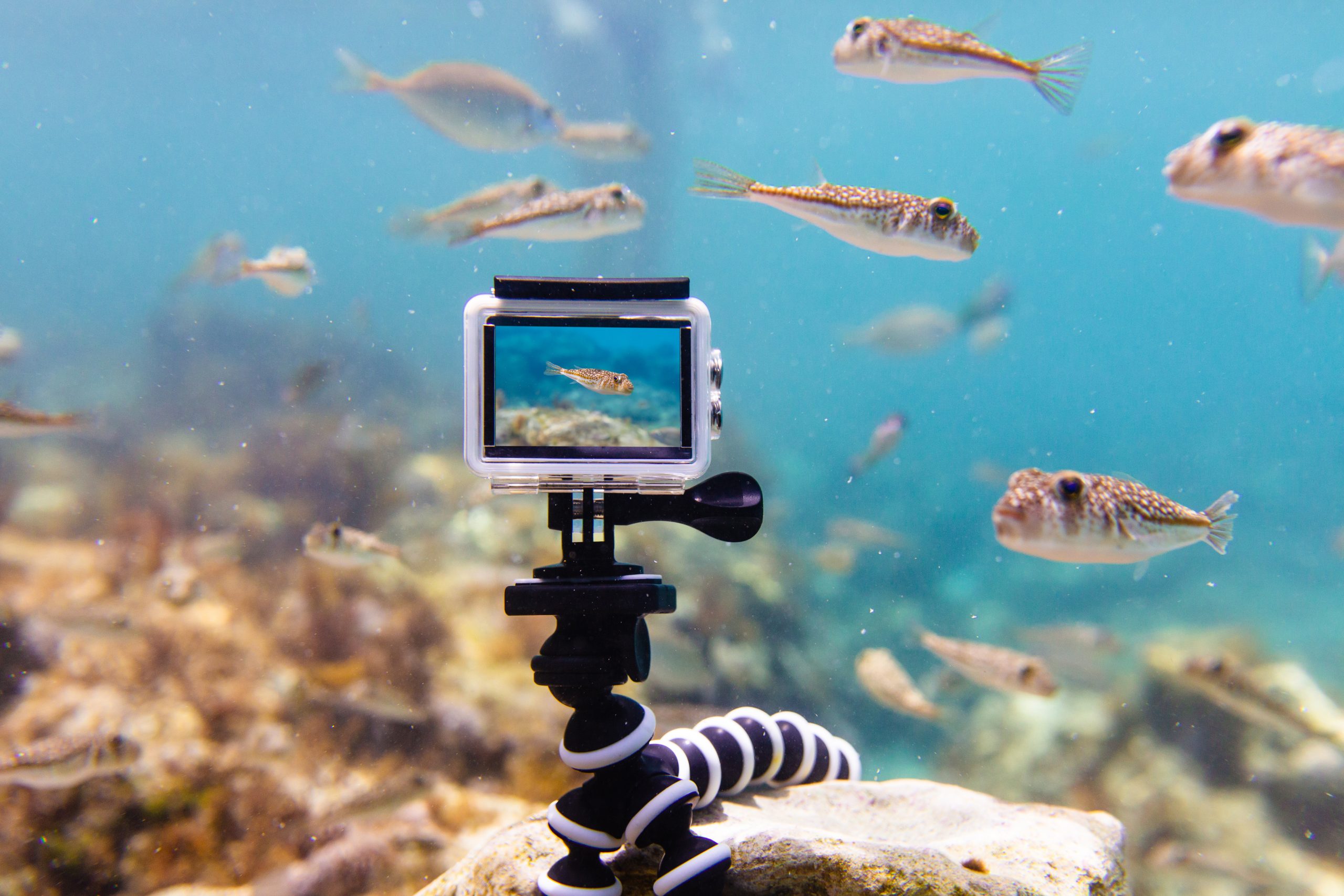
  • GoPro HERO Series: This series is known for waterproofing, durability, and top-tier stabilization. However, look for the HERO12 Black, which can reach up to 131 ft without housing, and the HERO13 Black. HERO 13 comes with housing and can reach depths of up to 200 ft.
  • Sony RX100: This model offers high-quality imaging with manual controls. However, it requires the MPK-URX100A, rated for depths up to 130 feet.
  • Olympus Tough TG Series: Up the line,  The TG-6, TG-7, TG-5, and TG-4 offer high-quality imaging with manual controls. Furthermore, the Tough TG Series models are all waterproof. However, this model requires housing if it is used beyond 50 feet.
  • DJI Osmo Action 14: It’s excellent for wide-angle, stabilized shots. Dive up to 59 ft without housing and 196 ft with housing.
  • Insta360 IPX8: This 360-degree camera can reach 33 feet right out of the box and 164 feet in the dive case. However, both are sold separately.
  • iPhone 15 and 16 in Housing: This budget-friendly option requires a solid waterproof case. However, the max depth is up to 19 feet, so it is better for tropical shallow waters than deep-sea dives.
  • Mirrorless/DSLR Cameras with Housing: These offer professional-level footage, but costly and complex downsides. Therefore, consider speaking with a professional underwater photographer for more information.

Remember, use a reliable underwater housing rated for your depth to prevent leaks. Furthermore, check certifications and ratings for complete waterproof cameras.

Lighting & Stabilization

Light diminishes rapidly underwater, causing a blue/green tint. Combat this by:

  • Video lights (2,000+ lumens) are used at a 45-degree angle to minimize backscatter. For example, SeaLife Sea Dragon 2000, Light & Motion Sola Dive 2500, and Light & Motion SOLA Video 2500 are ideal lighting devices. Therefore, you can purchase them separately for the perfect lighting.
  • Furthermore, opting for wide-angle lights (120-degree beam)allows even more exposure.
  • Hold the camera close to your body and use frog kicks for steady movement.
  • Finally mount a camera tray & handle system or underwater tripod for ultra-smooth footage.

Mastering Filming Techniques

To capture professional-looking footage:

  • Maintain neutral buoyancy for stability.
  • Then, adjust manual white balance at different depths for true-to-life colors.
  • Next, Get as close to your subject as possible for sharper details.
  • Then, wide-angle lenses for expansive reef or pelagic species shots.
  • Finally, film from below for dramatic compositions, avoiding cluttered seabed views.

A pro tip for the road: Remember, position yourself with the sun behind your camera in shallower water for natural illumination.

Creating Engaging Social Media Content

TikTok rewards visually captivating, fast-paced videos. Here’s how to optimize your clips:

  • Hook viewers in the first few seconds—start with unique marine life or a jaw-dropping scene. Finally, you decide!
  • Then, keep videos concise, ideally under 60 seconds.
  • Next, use text overlays for quick context or fascinating marine facts.
  • Following that, leverage trending sounds and music to boost reach.
  • Finally, end with a call to action: “Follow for more underwater adventures!”

For Instagram, creating engagement through “reels” is similar to creating captivating videos on TikTok. However, the visual appearance is even more critical on your Grid. Remember, Instagram demands more visual elements throughout the app. Check out the reels section for editing tools and templates that turn videos into masterpieces!

Open Ocean Filming Considerations

Filming in the open ocean presents both challenges and incredible opportunities:

  • Showcase the vast blue environment—large marine species, deep drop-offs, and natural formations add intrigue.
  • Tell a mini-story with each video—whether it’s an encounter with a shark or an exploration of an eerie wreck.
  • Respect marine life: Remember, move slowly, avoid disturbing animals, and never touch or chase them.

Want to shoot like a pro? Then research the dive site to anticipate exciting encounters and plan your shots. Plan undertaking underwater videos for social media sites before posting them.

Editing for Maximum Impact

Editing brings your footage to life. Use CapCut, InShot, or VN Video Editor (for mobile) or Premiere Pro/DaVinci Resolve (desktop) to refine clips:

  • Apply color correction to counteract the water’s blue-green cast.
  • Stabilize shaky footage using built-in tools.
  • Add motion effects like slow-mo for dramatic marine movements.
  • Incorporate trending transitions but avoid overused visual gimmicks.

Remember, these apps can positively influence your underwater videos for social media reception.

Filming Responsibly & Safely

Safety and ethics should always come first:

  • Therefore, maintain impeccable buoyancy to avoid damaging coral reefs.
  • Always, stay aware of your surroundings, depth, and dive limits.
  • Also, never force interactions with marine life—let animals approach naturally.
  • Finally, dive with a buddy for safety, especially in unpredictable open waters.

As you film underwater videos for social media ensure safety for yourself or the environment.

Endless Opportunities

SCUBA diving in the open ocean offers endless opportunities for awe-inspiring TikTok videos. Therefore, with the right gear, techniques, and story, divers can capture mesmerizing footage and keep audiences hooked. Consequently, stunning content starts with responsible filming and ethical diving practices. When you film underwater videos for social media, you can post guilt free. Now, grab your gear, hit the water, and let your story of the sea come alive! Next, contact Kevin Alexander at By the Shore SCUBA Instruction to find group charters. Finally, see if our team has any adventures available. Possibly, our next excursion you will film beautiful underwater videos for social media.

Sources-

Beneath The Waves: Your Guide To Stunning Underwater Photos

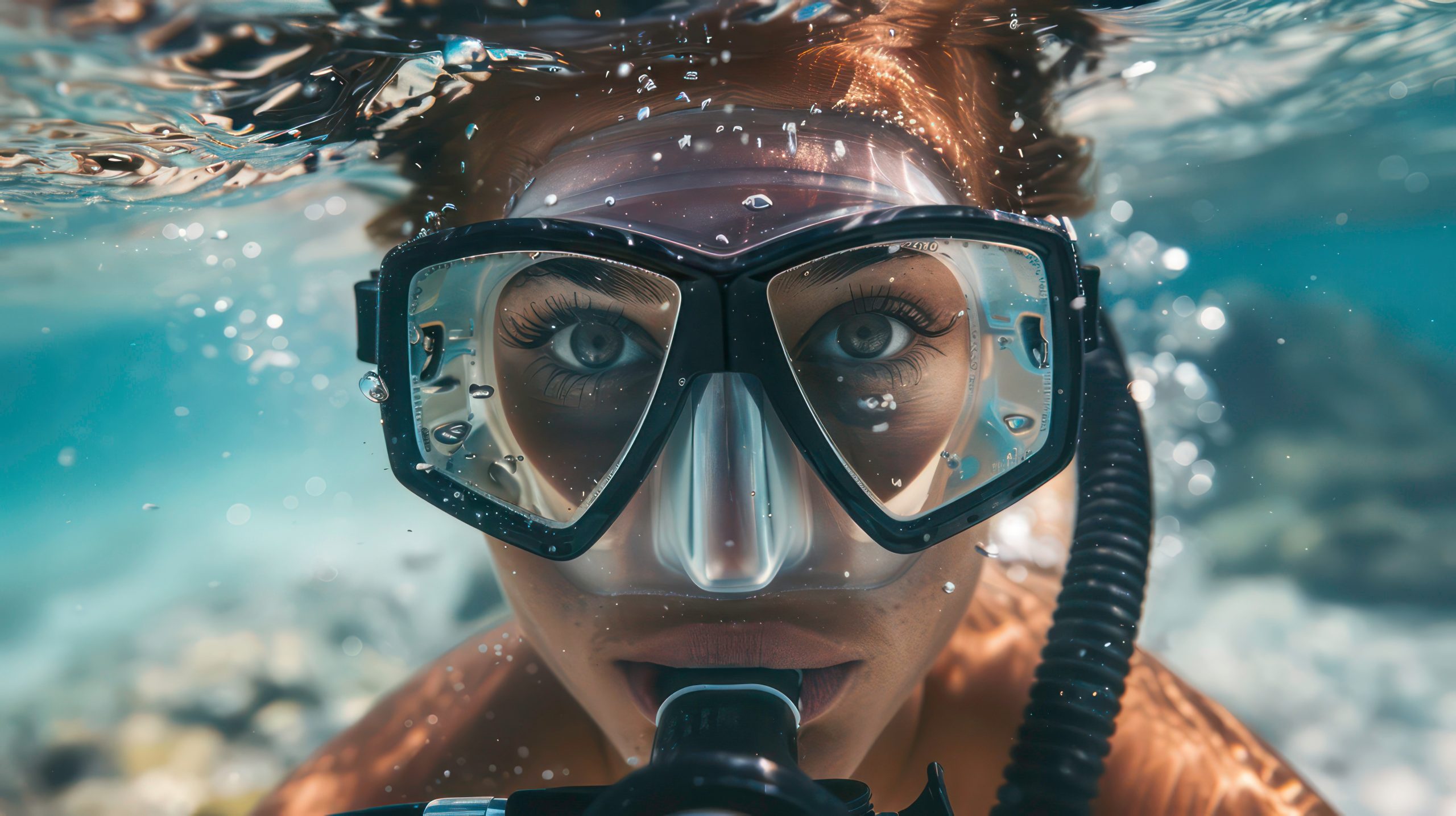
Closeup of a woman scuba diving with a diving mask on and looking at the camera.

Essential Gear for Underwater Photography

If you are a dive enthusiast, you’ve come to the right place! Get ready to dive deep to capture breathtaking beauty. Whether you are a beginner or aiming for award-worthy shots, this guide to stunning underwater photos will lead you down the right path. Here is your guide to snapping stunning underwater images! Before diving in, ensure your gear is prepared. This is your guide to stunning underwater photos:

  • Digital Camera: You’ll need a digital camera suitable for diving.
  • Waterproof Housing: Protect your camera from getting wet with a waterproof case.
  • Strobe Light or Underwater Flash: These lights enhance colors and illuminate your shots.
  • Lens: A fish eye or wide-angle lens is best for capturing marine life in vibrant colors.

Think of your camera setup as your underwater tool kit. An articulated arm for your flash or light will help you maneuver and direct light where needed most. The tips below will help you take incredible breathtaking shots.

Beneath The Waves: Your Guide To Stunning Underwater Photos

  • Get Close-Water reduces sharpness and contrast, so the closer you are to your subject, the better your image will be. Not to get too technical, but this is because water absorbs light and colors, which impacts your image quality. So, get up close and personal with that fish!
  • Use Natural Light in Shallow Waters-Natural light works best in shallow waters, typically less than 10 m. The deeper you go, the less light penetrates, making your photos appear darker and lose color. For these shallow dives, shoot with the sunlight behind you to illuminate your subject.
  • Master Your Composition- Regarding composition, the rule of thirds is your friend. Imagine your frame divided into nine equal parts bytwo equally spaced horizontal and vertical lines. Place your subject along these lines or at their  intersections to create a balanced and engaging photo.
  • Focus on the Eyes-If your subject has eyes, make them the focal point. Eyes are naturally compelling, and focusing on them can draw viewers into your photo, making it more engaging and lifelike.
  • Utilize Artificial Light-Underwater scenes can often lack sufficient natural light, especially at deeper depths. Using a strobe or video light can help bring back the vibrant colors water absorbs. It may take practice to angle your light correctly, but that’s part of the fun!
  • Adjust Your White Balance Manually-One of the secrets to great underwater shots is manually adjusting your camera’s white balance. Adjusting the white balance helps compensate for losing natural light and colors as you dive deeper. Learn how to tweak these settings, and you’ll see a significant improvement in your photos.

Overcoming Challenges in Underwater Photography

Underwater photography could be smoother sailing-oops, diving! Here are some common challenges and how to overcome them:

  • Lighting Issues-The deeper you dive, the less light you have. Invest in good strobe lights to compensate for this loss and bring out the best in your subjects. Remember, strobes also help reduce backscatter, those annoying specs caused by particles in the water.
  • Refraction-Light behaves differently underwater due to refraction, which causes objects to appear closer and more significant than they are. It’s tricky, but you’ll learn to estimate distances more accurately with practice.

Navigation Tips

Navigating underwater can be disorienting at first. Use a compass or follow natural landmarks to find your way and ensure you return to your starting point safely. Natural navigation involving visual landmarks works best in clear waters where you can see a reasonable distance.

Editing your photos: The Final Touch

Once you’re back on land, you can begin editing your photos with your chosen software. Even the most professional photographers touch up and enhance their photos to bring out what the naked eye sees and the camera can’t catch. Editing your photos allows you to improve your images further. Here are some guidelines for editing your photos.

  • Adjust Color Balance: Correct any color shifts that occurred underwater.
  • Increase Brightness/Contrast: Makes your subjects pop.
  • Remove Backscatter: Clean up those pesky specks.
  • Crop for Composition: Adjust the framing to emphasize your subject.

Practice with the Pros

Once you feel ready to get your (waterproof/dive) camera wet, consider booking an open-water dive class to brush up on your SCUBA diving skills or enjoy a group charter with By the Shore SCUBA Instruction. Located in Raleigh, NC By the Shore SCUBA Instruction is run by PADI instructor Kevin Alexander, who is passionate about SCUBA and ready to guide you on your underwater photography journey. With these tips and tricks up your sleeve, you’re well on your way to capturing stunning underwater photos that will wow everyone. So, pack your gear, dive in, and snap away! We hope you enjoyed your guide to stunning underwater photos.

Sources-

https://www.naturettl.com/equipment-underwater-photography

Picture Perfect: Mastering Real Estate Photo Composition Strategies. https://www.homeoptix.com/post/picture-perfect-mastering-real-estate-photo-composition-strategies

https://diveintolife.blog/how-to-take-photos-underwater

https://angelinapilarinos.com/how-to-take-a-great-underwater-photo/

https://divephotoguide.com/underwater-photography-techniques/article/autofocus-underwater-

photography/

https://oceansnaps.com/get-started-with-underwater-photography/

https://www.scuba.com/blog/3-common-light-challenges-underwater-photography/

https://dtmag.com/thelibrary/setting-course-confidence-tips-navigating-underwater-ease/

https://dipndive.com/blogs/scuba-skills/beginner-s-guide-to-underwater-photography-5-steps-to-get-

started

-Take a Good Travel Photo: Capture, Compose & Edit Like a Pro. https://photorelive.com/blog/photography/take-good-travel-photo-capture-compose-edit-pro

-Editing and outline created with the help of AI

Bing. Compose. https://www.microsoft.com/en-us/edge/features/compose?form=MA13FJ

What to Expect when Embarking into Cave Diving

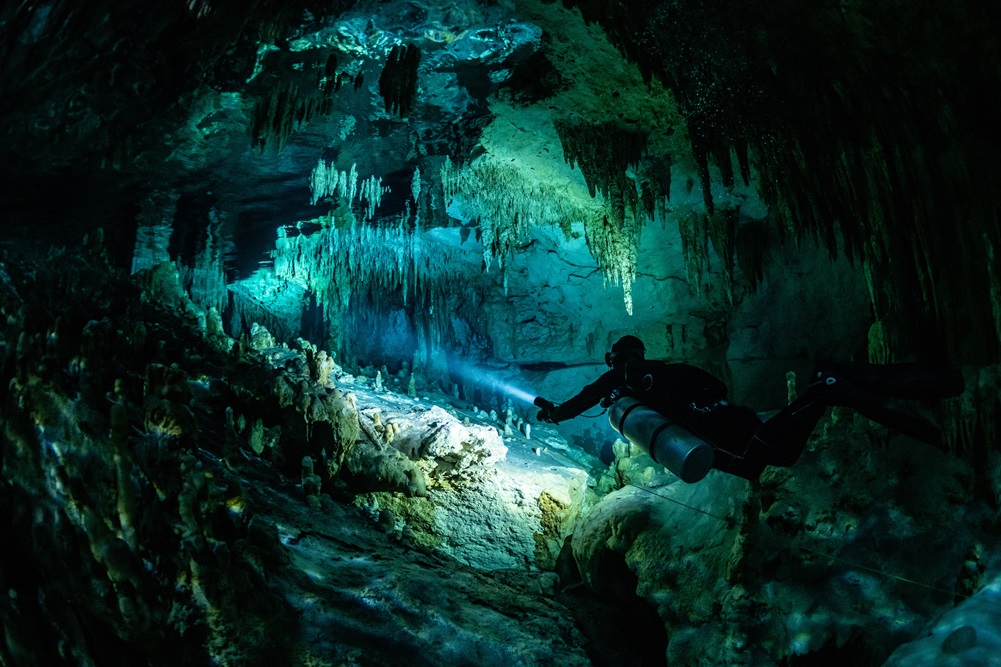
cave diver instructor leading a group of divers in a mexican cenote underwater

Embarking into Cave Diving

Cave diving is a highly technical form of SCUBA diving that involves diving in intricate and enclosed underwater environments. It allows you to explore otherwise inaccessible spaces with otherworldly geological formations that may not be found above the surface, including lakes, stalagmites, stalactites, and unique lifeforms. Look into embarking into cave diving.

What Cave Diving offers

With numerous different types of caves to explore, cave diving offers unparalleled adventure and a profound sense of accomplishment. It requires a combination of skills to navigate through underwater worlds only the privileged few get to see. Each dive can offer new experiences, evoking feelings of awe, solitude, and discovery as you explore new frontiers. More than just a new opportunity for adventure, cave diving can also be invaluable in search and rescue operations.

The Risks of Embarking into Cave Diving

While cave diving presents an exciting opportunity for a new and unique adventure, it does not come without risks and should be approached cautiously. Diving in confined spaces with limited visibility can present several potential problems, and insufficient skills and experience can lead to fatalities. The most common issues with cave diving stem from breaching critical safety rules, including diving with insufficient air supplies for a safe exit, inadequate lights, and maintaining a continuous guideline to the surface[1].

Equipment for Cave Diving

The equipment used is typically different from that used in a standard open-water dive. Additional equipment may be required, including, but not limited to, double ‘twin’ tanks or side-mounted tanks to ensure sufficient air supply, specifically designed regulators, lights for visibility, cutting devices, and a helmet equipped with a light mounting system to provide protection and help secure the light source.

Requirements For Cave Diving

Cave diving requires excellent buoyancy control, regulation, and air and navigational skills. You must undertake the necessary training with a certified instructor before undertaking cave diving. Once you’ve received your PADI or SSI open water certification and extensive open water diving experience, you can take various cave diving courses. Many SCUBA diving organisations, including PADI[2]and SSI[3], offer cave diving courses. Their websites provide details of these courses and where they are delivered. Prerequisites for these courses typically include having completed a certain number of open-water dives, some with a requirement for technical dive experience.

A Checklist of What You Need Before Embarking into Cave Diving

By undertaking a cave diving course with an instructor, divers can become informed of safe diving practices, procedures, and equipment configuration. Instructors can also support the development of skills, dive planning capabilities, problem-solving abilities, and other required skills of cave divers. Before embarking on this quest fathoms below, divers should always adhere to the following to ensure safety:

  • Undertake sufficient training with a certified instructor
  • .Maintain physical and mental fitness.
  • Respect the environment in which you’re diving.
  • Apply all relevant safety protocols. Always plan the dive and dive the plan.

Finding the Right Instructor

Finding the right instructor is imperative to having a safe cave dive. You want to make sure the instructor has experience in cave diving. For more information on finding the right instructor, check out By the Shore SCUBA Instruction’s blog. If you are interested in gaining your PADI dive certification and live or are traveling through North Carolina, consider By the Shore SCUBA Instruction. Kevin Alexander offers instruction for beginners and seasoned divers alike. Call By the Shore SCUBA Instruction today.

Sources-

[1] Buzzacott, Peter L.; Zeigler, Erin; Denoble, Petar; and Vann, Richard (2009) “American Cave Diving Fatalities 1969-2007,” International Journal of Aquatic Research and Education: Vol. 3: No. 2, Article 7. https://scholarworks.bgsu.edu/ijare/vol3/iss2/7/  

[2] https://store.padi.com/en-us/ns/courses/cavern-diver/p/cavern-diver/

[3] https://www.divessi.com/en/advanced-training/extended-range/cave-diving/cave-diving

Deep Sea Diving: Is Your Heart Ready for Underwater Adventures?

deep sea diving heart health

deep sea diving heart health

Deep Sea Diving: Is Your Heart Ready for Underwater Adventures?

Are you planning to dive into the deep sea? Imagine the excitement as you prepare to jump into the underwater blue world. You can almost feel your heartbeat strongly, pounding with excitement and thrill. But before you take that adventurous dive, you must clear one crucial checkpoint: your heart health.Deep Sea diving has increased worldwide, as people are more enthusiastic while taking part each year. It requires the human body to adapt to the physiological changes that place stress on the body. So, heart health and physical fitness are essential for practicing this sport. A medical assessment is required only when facing heart issues to assess individuals’ fitness for diving practice.

Deep Sea Diving: Is Your Heart Ready for Underwater Adventures?

You dive headfirst into an aquatic adventure but remember that your heart dives first. The heart plays a pivotal role in deep-sea exploration. The cardiovascular system is most influenced by external water pressure. The deeper you dive, the higher the pressure your body faces. There is more poor circulation in limbs, and the heart maintains that pressure. It works tirelessly to pump oxygen-rich blood to our muscles and vital organs. So, the heart has to work at its total capacity. You can understand how the heart must be healthy for this enjoyable diving experience. It’s a safe sport until you keep your heart health a priority.

Why Heart Health is Important in Deep Sea Diving

At the dry land, your heart buzzes along, keeping you alive and well. Your oxygen supply is limited in water. Your heart must efficiently use every bit of oxygen from your reservoir. Under the crushing pressure of the deep sea, it faces a persistent challenge. When you dive, your body undergoes several physiological changes, so your heart health matters to enjoy marine life:

  • Increased Oxygen Demand

Swimming is a physically demanding activity that requires perseverance and strength. At the same time, managing diving equipment requires significant effort. Your body tries to put your heart to work at the best capacity to meet the oxygen needs.

  • Reduced Heart Rate

The mammalian diving reflex stimulates the vagus nerve, which lowers the heart rate. This reflex is important in mammals to reduce the consumption of oxygen. However, in humans, it is very systematic as blood pressure increases, thus resulting in a load on the heart.

  • Increased Blood Volume

When you dive, water exerts pressure on your body and, thus, on blood vessels.  It increases the blood volume in your chest, boosting central venous pressure and increasing cardiac output to circulate the larger blood volume.​

  • Change Of Temperature

There is always a sharp drop in temperature that can cause coronary artery spasms and arrhythmia. This can result in a heart attack or cardiac arrest.

Reflect on Deep Sea Diving: Is Your Heart Ready for Underwater Adventures?

Your heart’s capacity to support a high blood output lessens with age and disease. Having a healthy heart is of the utmost importance for a diving experience. If you have health issues with some symptoms, particularly those that limit physical capacity. A doctor should evaluate you in detail before diving, namely:

  • Chest pain while doing exertion
  • Palpitations, loss of consciousness, and shortness of breath
  • Unable to climb a few flights of stairs
  • Hypertension or high blood pressure; elevated risk of a stroke due to the rupture of blood vessels
  • Heart mumble

Essential Tips for Deep Sea Diving and Your Heart Health

Smoking, high cholesterol, sedentary lifestyles, and obesity are also some risk factors for heart disease. There might be symptoms that could appear underwater that are hidden on dry land.

  • It is important to have regular medical checkups to ensure that your heart is fit enough to dive. A cardiovascular health assessment on time can prevent your dream dive experience from being spoiled.
  • If you want to have a good diving experience with fitness, quit smoking, which is harmful to the heart.
  • Leave a sedentary lifestyle and exercise daily for a healthy heart and a suitable body shape.
  • If you are facing heart disease, you must pass the rigorous exercise test on a treadmill called the Bruce Protocol test to return to water land.

Deep Sea Diving: Is Your Heart Ready for Underwater Adventures?

Diving has no age limit; you can dive for much longer. Treat your heart with care as it cares for you. Regular exercise, a balanced diet, and medical checkups are crucial for a safe and long-term deep diving experience. Dive deep and dive safe with this incredible bouncing piece that matters in every second. For more information on becoming a deep sea diver contact By the Shore SCUBA Instruction run by Kevin Alexander, our seasoned PADI master.

Sources-

-News – Snowdonia Watersports Ltd. https://snowdoniawatersports.com/blogs/news

-https://tweakindia.com/wellness/fitness/at-18-she-couldnt-climb-up-stairs-without-pain-at-23-shes-hitting-100kg-deadlifts-and-has-transformed-her-life/

Five Ways to Prevent Heart Disease – Coastal Urgent Care Bossier. https://coastaluc.com/health-blog/five-ways-to-prevent-heart-disease/

-http://www.scubadiving.com/final-step-heart-health-and-scuba-diving

-https://www.hospitaldaluz.pt/en/health-and-wellness/diving-and-heart

-https://kardi.ru/en/index/Article?&ViewType=view&Id=57

-https://www.offshore-energy.biz/effects-of-diving-on-health-and-circulatory-system-study/

-https://www.scubadiving.com/ask-dan-how-does-heart-health-impact-my-diving